
Browse our nursery selection online and plan with confidence. We confirm availability before payment, so there are no surprises at pickup.
Shade trees for structure, canopy, and seasonal interest.
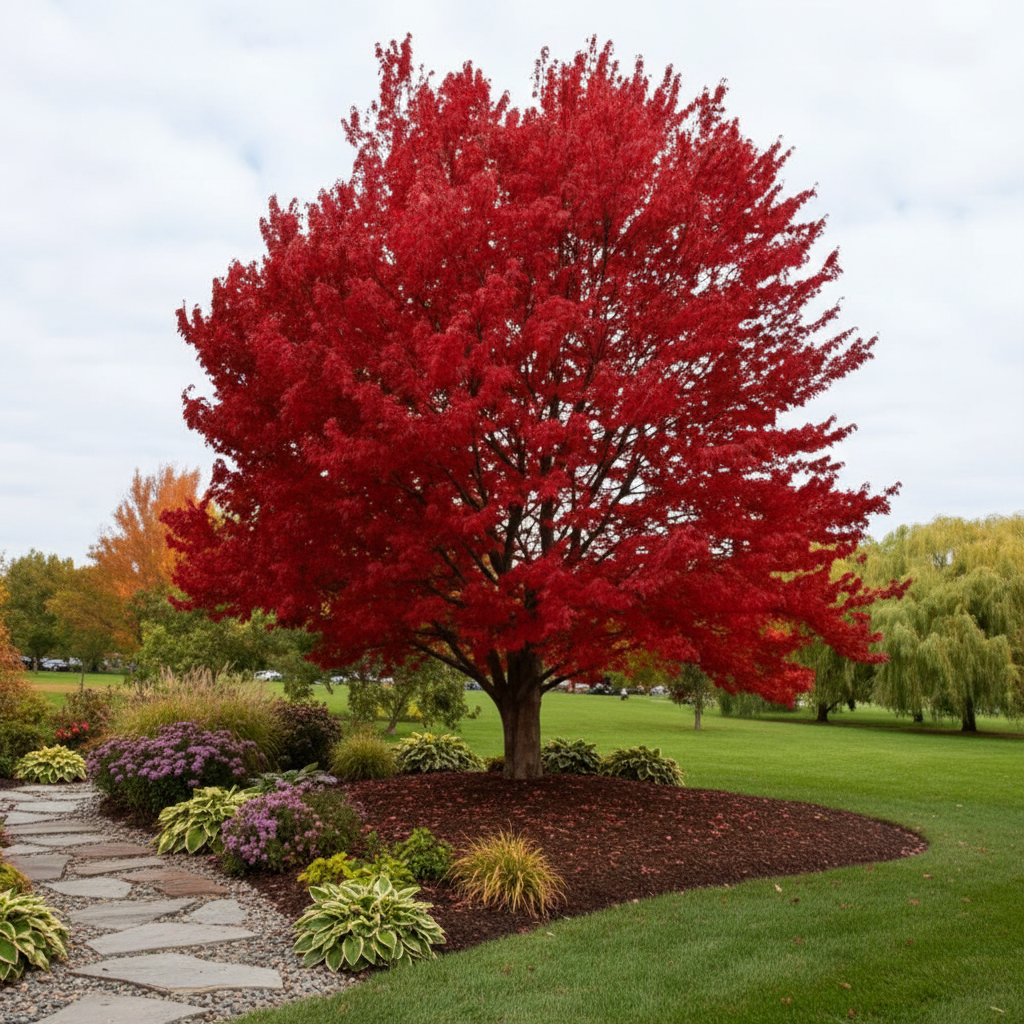
The Autumn Blaze Maple is a popular, fast growing hybrid cross between the Silver and Red Maples. It is highly valued for its symmetrical, oval shaped canopy and spectacular, long lasting orange red fall foliage. This tree is known for its rapid development, often growing much faster than pure Red Maples. This variety can grow as much as 2 to 3 feet per year under ideal conditions. Best grown in full sun (at least 6 hours daily) for the most vibrant fall colour.
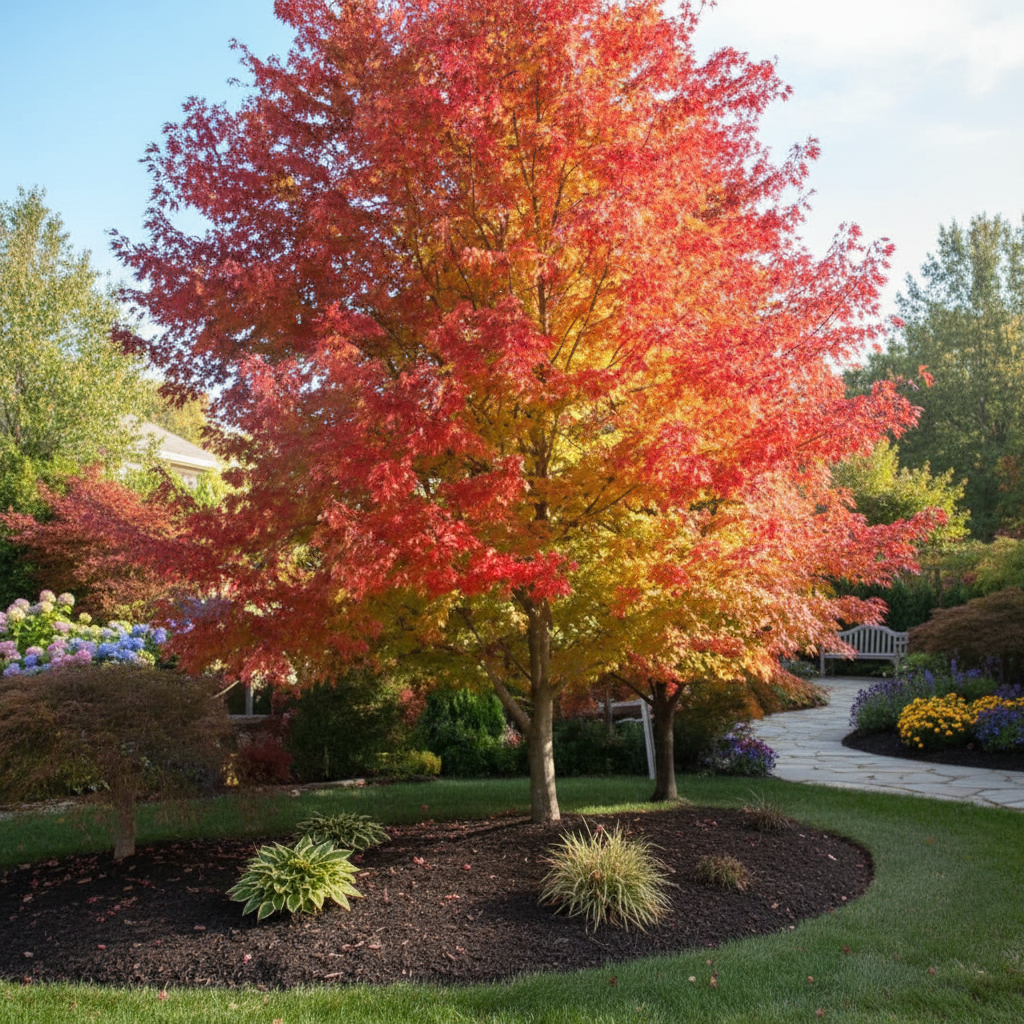
The Sienna Glen Maple is a vigorous, cold hardy hybrid tree prized for its uniform pyramidal shape and reliable fall colour. This variety was discovered in Minnesota and selected for its strong central leader and denser branching compared to other maples. It features a distinctive upright pyramidal form when young, maturing into a broad oval crown. It produces medium green leaves in summer that turn vibrant shades of yellow orange, rusty orange, and burgundy red in the fall. Requires full sun for optimal growth and the most vibrant fall colours.
 ★ Featured
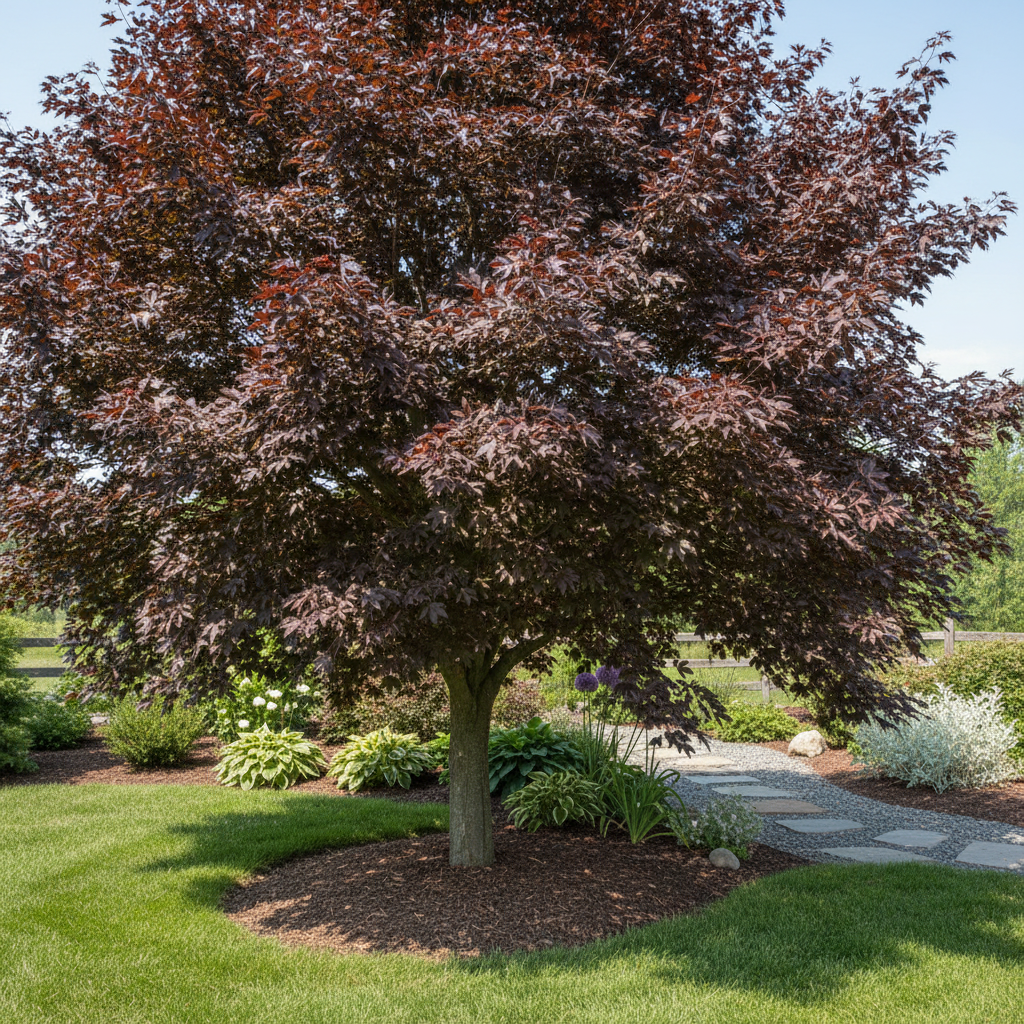
 The Royal Red Maple is a popular, hardy, shade tree known for its dense, rounded canopy and intense, deep purple maroon foliage that lasts from spring through to fall. The most distinctive feature is its large, lobed leaves that emerge as a rich red in spring and maintain a deep, shimmering burgundy or purple red colour through the summer. In early spring, before leaves appear, the tree produces clusters of striking lemon yellow or yellow green flowers that contrast sharply with the dark branches. Unlike many green leaved maples that turn bright red, the Royal Red typically shifts into a deeper, dark purple or reddish bronze hue in autumn. For the best performance and colour retention, plant in full sunlight.
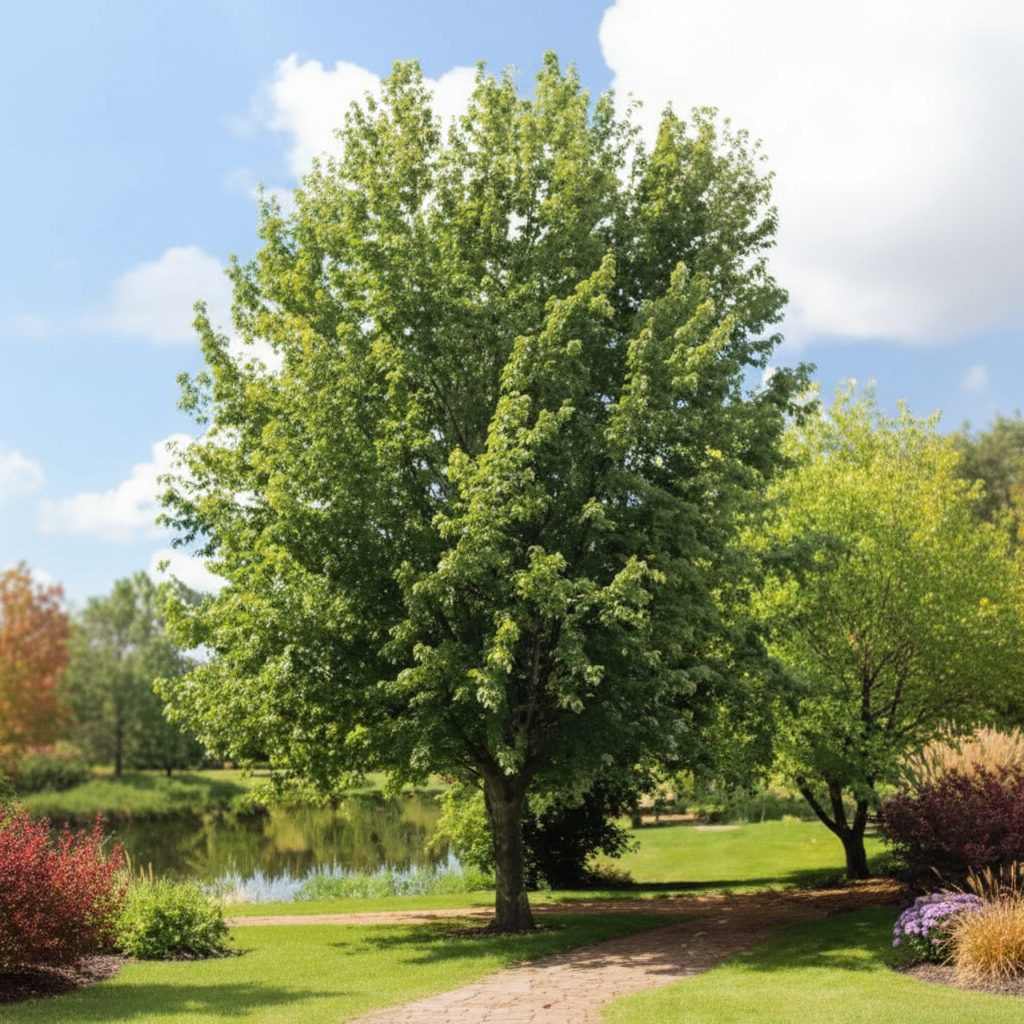
The Silver Maple is a large, deciduous tree native to eastern North America, recognized for its rapid growth and distinctive leaves. The leaves have 5 to 7 deeply notched lobes and are bright green on the upper surface and a distinct silvery white below, creating a "fluttering" effect in the wind. The bark is smooth and light grey on young trees, becoming dark, reddish brown, and shaggy with age as it breaks into long, thin strips that peel at both ends. Thrives in full sun and rich, moist to wet soils. It is highly adaptable and can survive periods of flooding as well as poor, dry soils once established.
 ★ Featured
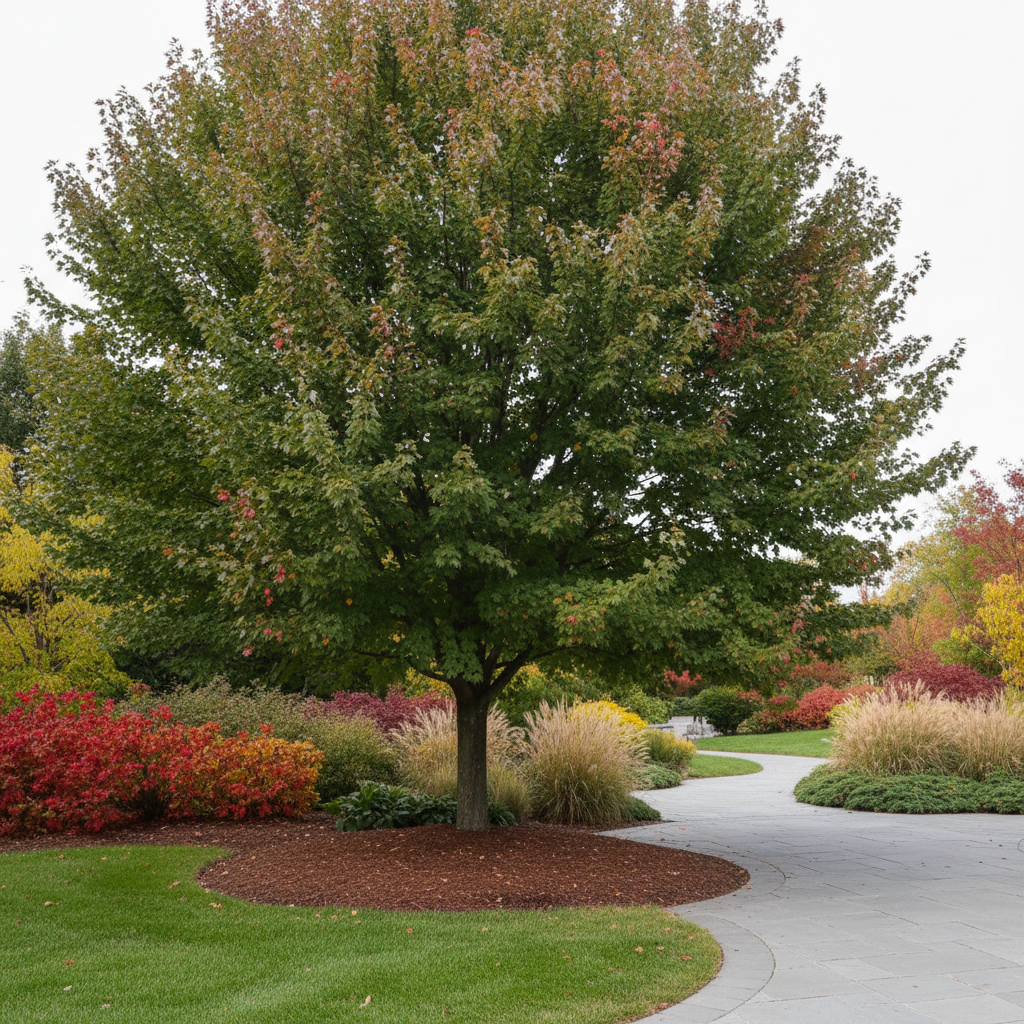
 The Red Maple is one of the most common and adaptable deciduous trees in North America, prized for its vibrant scarlet foliage in autumn. It is often used as a fast growing shade tree in landscapes and is known as the "swamp maple" for its ability to thrive in wetter conditions. It features 3 to 5 lobed leaves with sharp "V" shaped notches and toothed edges. While leaves are green in summer, the tree earns its name through its red flowers, twigs, buds, and brilliant fall foliage. Prefers full sun for the best fall colour but will tolerate part shade.
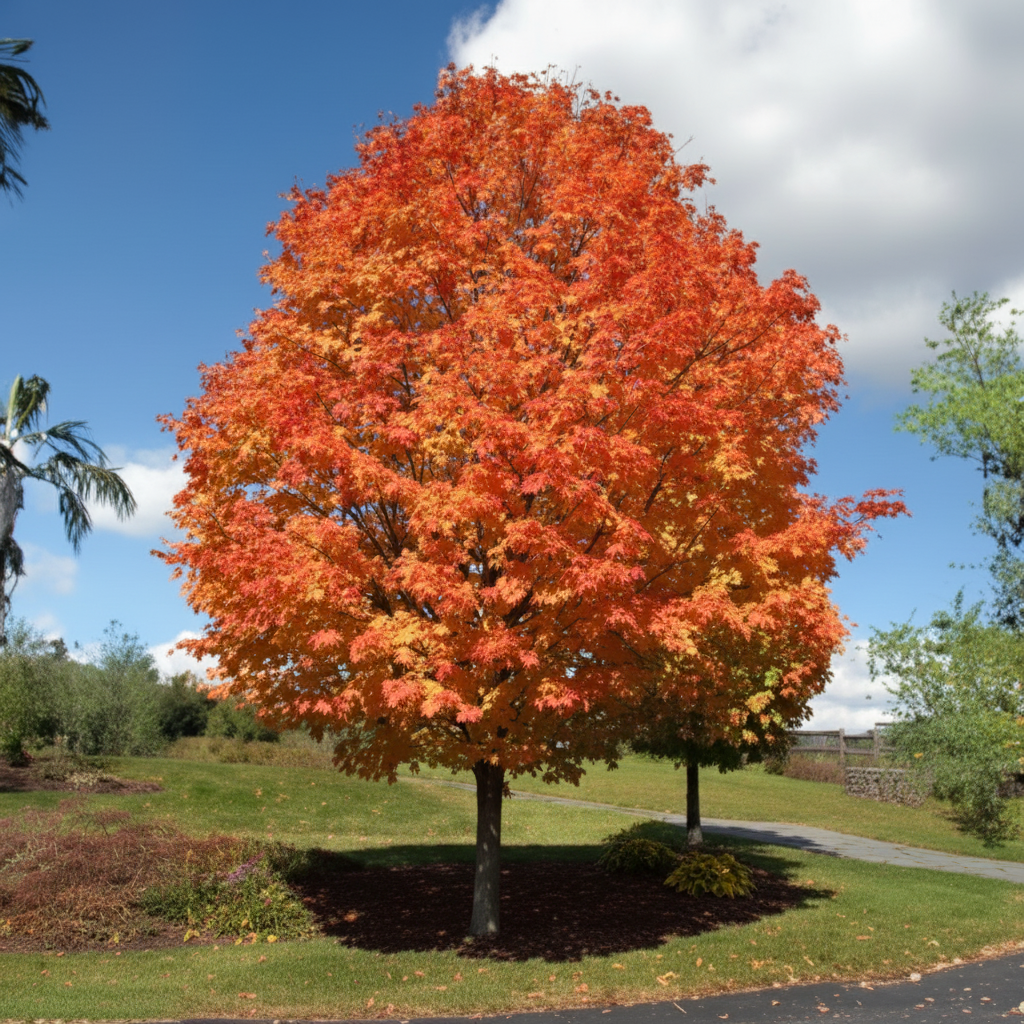
The Sugar Maple is Canada's national tree, iconic for its brilliant autumn foliage and for being the primary source of maple syrup. It has simple leaves with 5 distinct lobes, featuring "U-shaped" notches between them, distinguishing them from red or silver maples. Famous for spectacular, intense fall colours ranging from yellow to burnt orange and red. This variety also has smooth and light gray bark when young, developing into rough, deep, shaggy, or furrowed bark as the tree ages. Although this variety can handle more shade than most maples, it may be sparse or slow growing if too much shade is present. For the best foliage density and colours, plant in full sun.
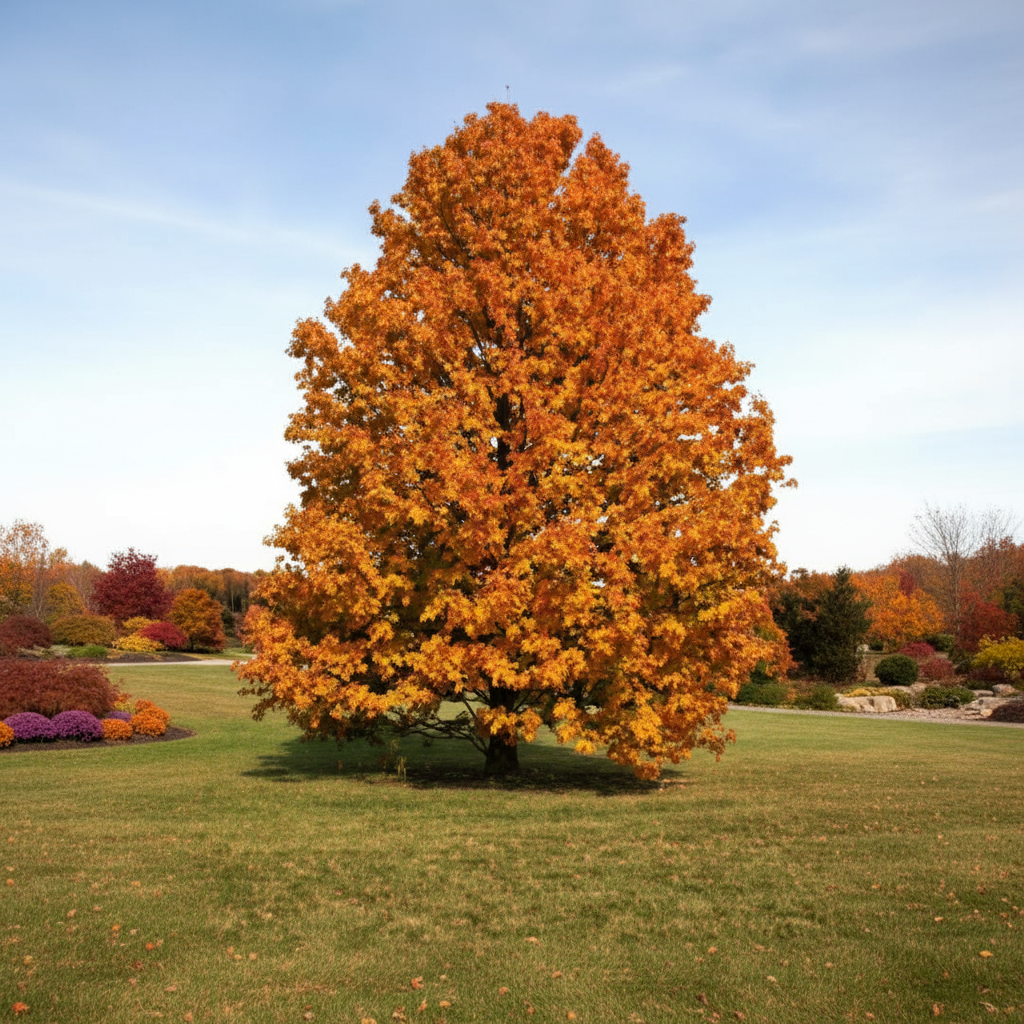
The Legacy Sugar Maple is a fast growing shade tree known for its dense, symmetrical oval crown, superior heat tolerance, drought resistance, and vibrant orange red fall colour. The leaves are thick, waxy, and dark green, providing a glossy appearance throughout the summer. This thickness makes them resistant to "leaf tatter" caused by wind and burning during drought. This variety features a spectacular display, with leaves turning brilliant shades of red, orange, and golden yellow in the fall. Thrives in full sun to achieve the most intense fall colours, though it can tolerate part shade.
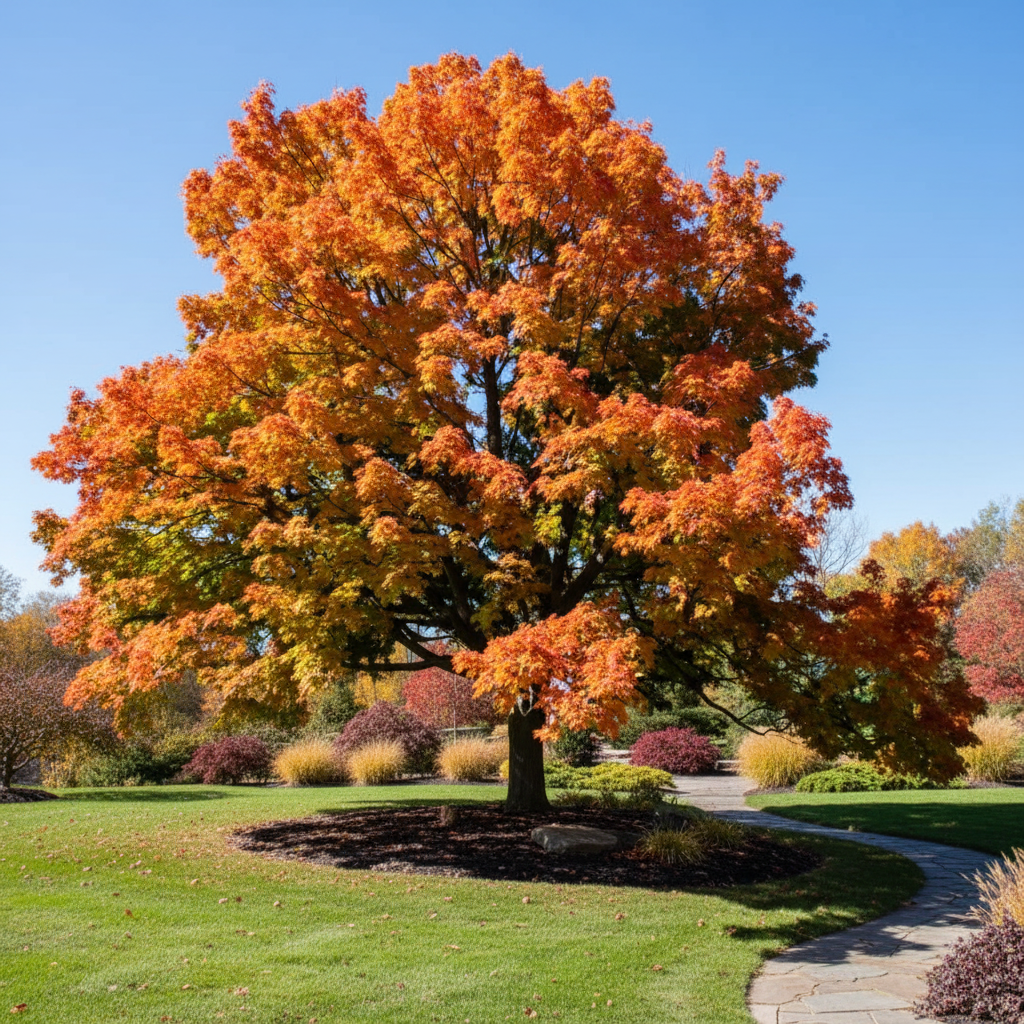
The Flaxmill "Majesty" Sugar Maple is a vigorous growing variety of the native sugar maple, known for its exceptionally rapid growth rate and symmetrical, oval shaped canopy. It was originally selected at Flax Mill Nursery in New York for its superior resistance to environmental stressors like sunscald and frost cracks. Its leaves are thick, dark green, and leathery, turning into vibrant shades of orange and red during the fall. Due to its dense, shapely form, it is highly recommended as an accent or shade tree for large lawns and parks. Prefers full sun for the most vigirous growth and vibrant fall colours but will tolerate part shade.
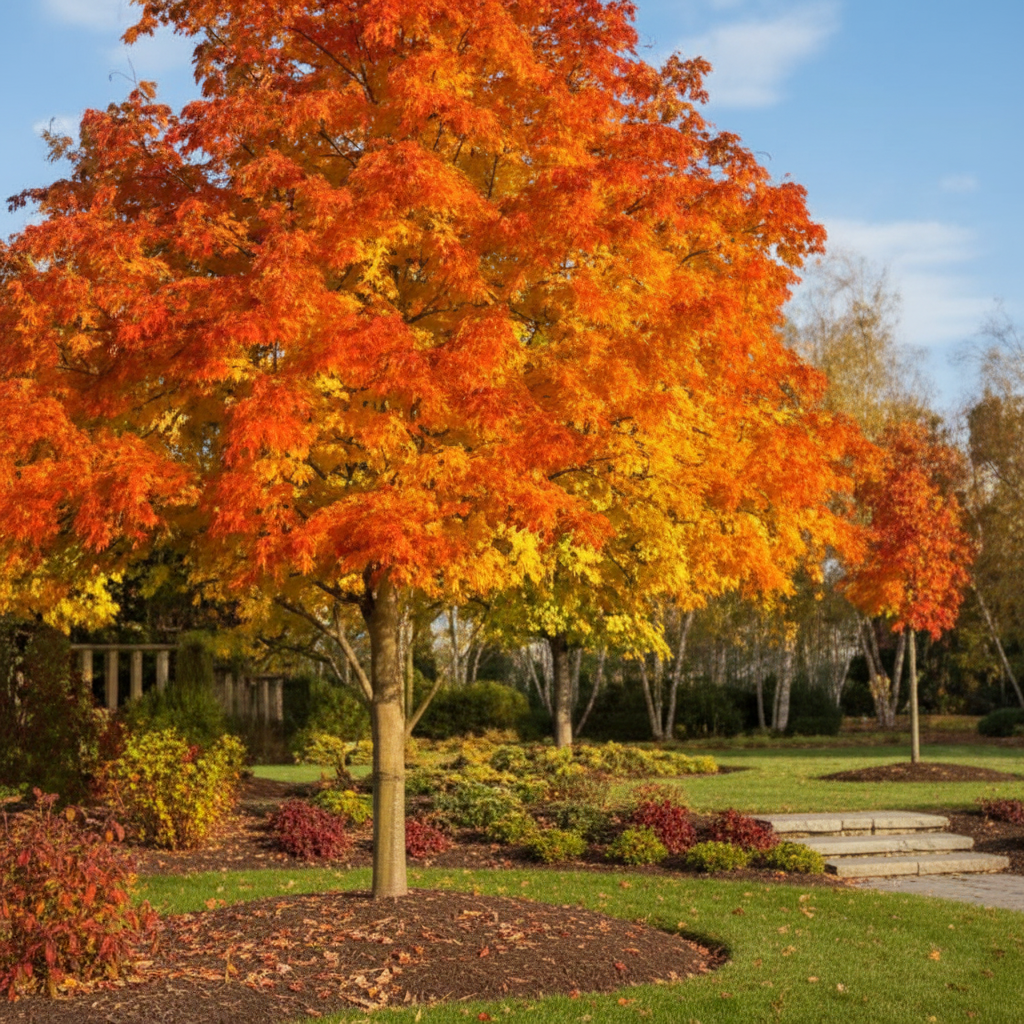
The Green Mountain Sugar Maple is a hardy, upright oval shade tree known for its thick, deep green leaves that resist summer scorch and its consistent, showy autumn displays ranging from bright gold and burnt orange to scarlet red. It is specifically bred to be more heat and drought tolerant than other maples, making it an excellent choice for large lawns, parks, and wide streetscapes. Performs best in full sun but can tolerate part shade.
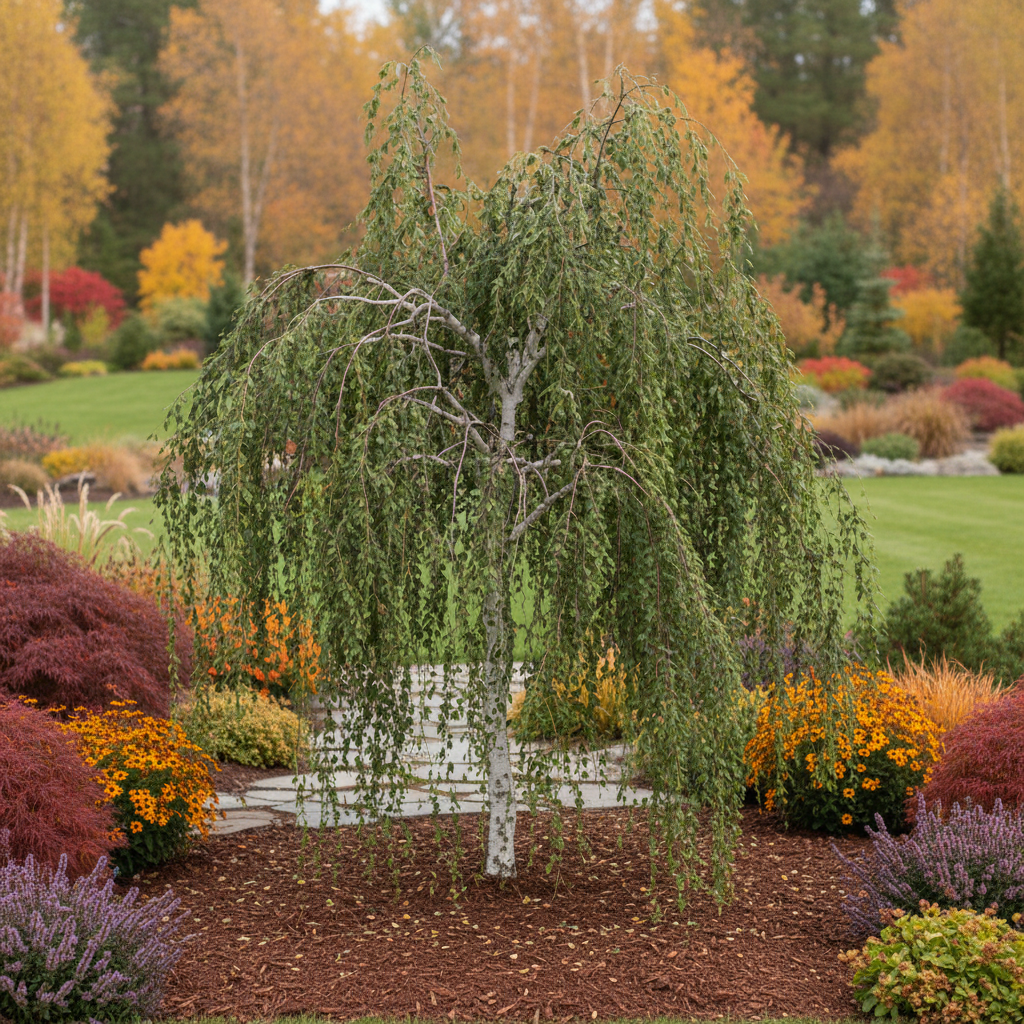
Fountain Birch is a fast growing, hardy tree native to Manitoba, recognized for its unique dark purple brown bark. This weeping and often multi stemmed variety features dark green leaves that turn yellow in the fall and can grow 2-3 feet per year. It is often used as a feature or shade tree due to its graceful habit and ability to thrive in wet or poorly drained soils. For the best growth, shape, and fall colour, plant in full sun to part shade.
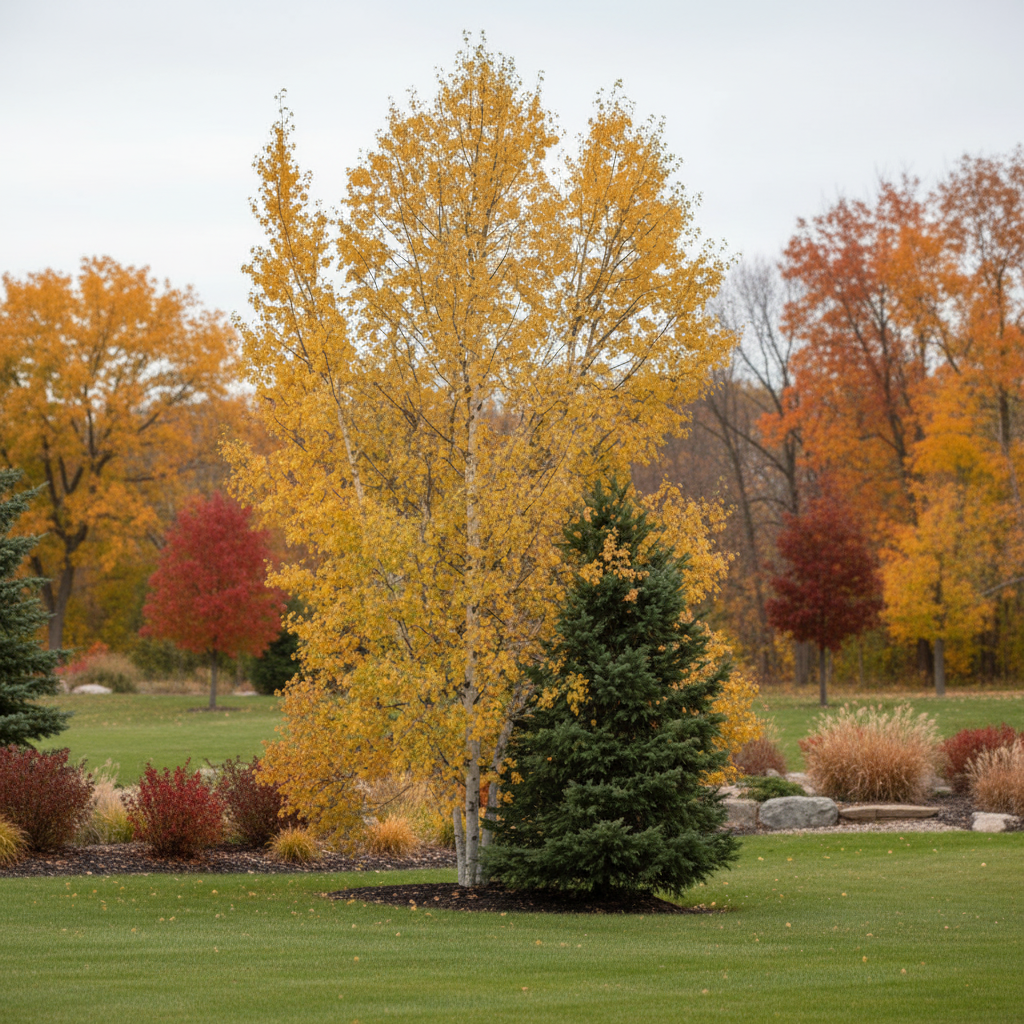
The Paper Birch is a medium sized deciduous tree iconic to northern North America. It is most famous for its distinctive white bark that peels in thin, paper like layers, revealing a creamy inner surface. Mature trees feature chalk white bark with horizontal black lines called lenticels, which allow for gas exchange. Saplings typically have dark reddish brown bark that takes about three to four years to turn white. The leaves are oval or triangular with coarsely double toothed edges and in the fall, they turn a brilliant golden yellow. Paper birch trees require full sun to part shade, ideally receiving at least 6 hours of direct sunlight daily.
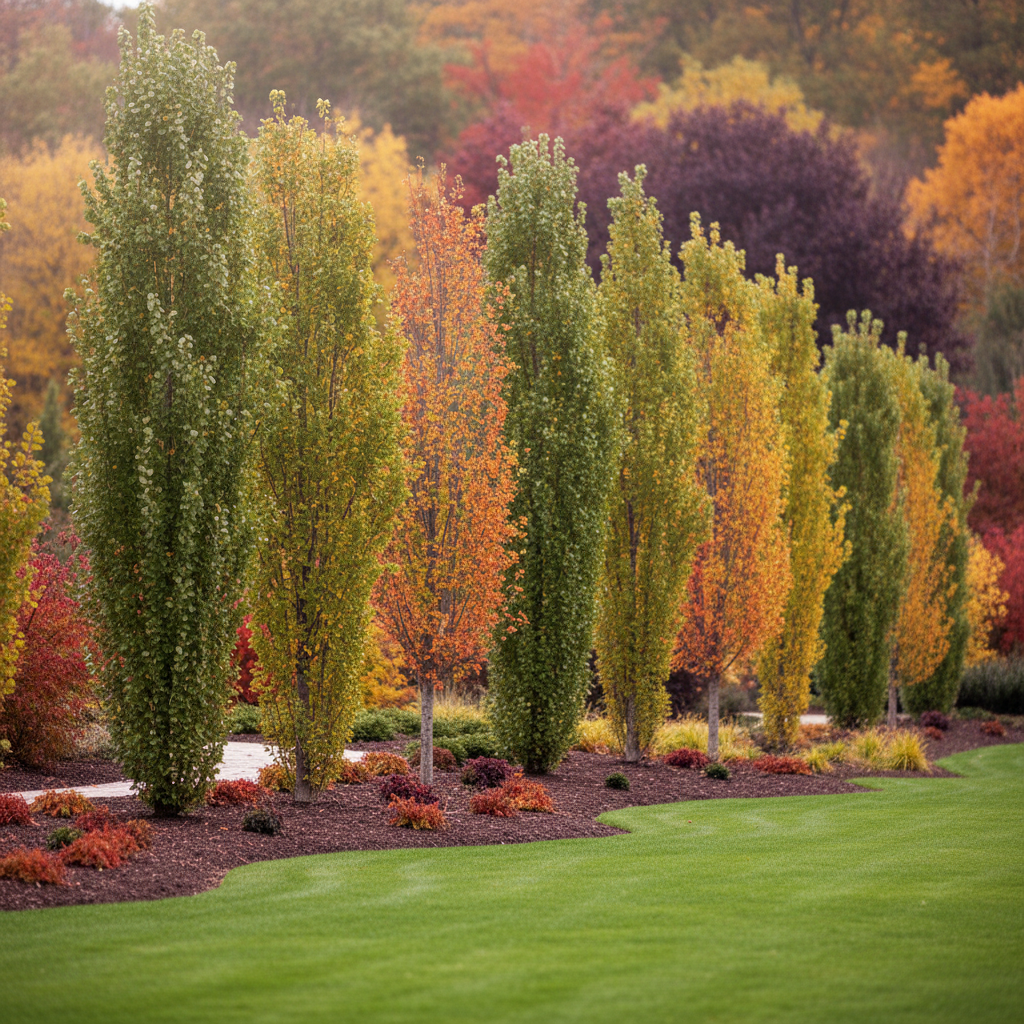
The Sundancer Poplar is a fast growing, columnar hybrid tree specifically developed in Saskatchewan for the harsh conditions of the Canadian prairies. It is highly valued for its extreme cold hardiness, disease resistance, and seedless nature, making it a "fuzz free" alternative to traditional poplars. It features glossy, diamond-heart shaped green leaves that turn a striking golden yellow in the fall. It maintains a strictly upright, columnar habit, which is ideal for tight spaces or vertical accents. This varitey generally lives for 30 to 60 years, which is relatively long for a fast growing hybrid. Requires full sun to thrive.
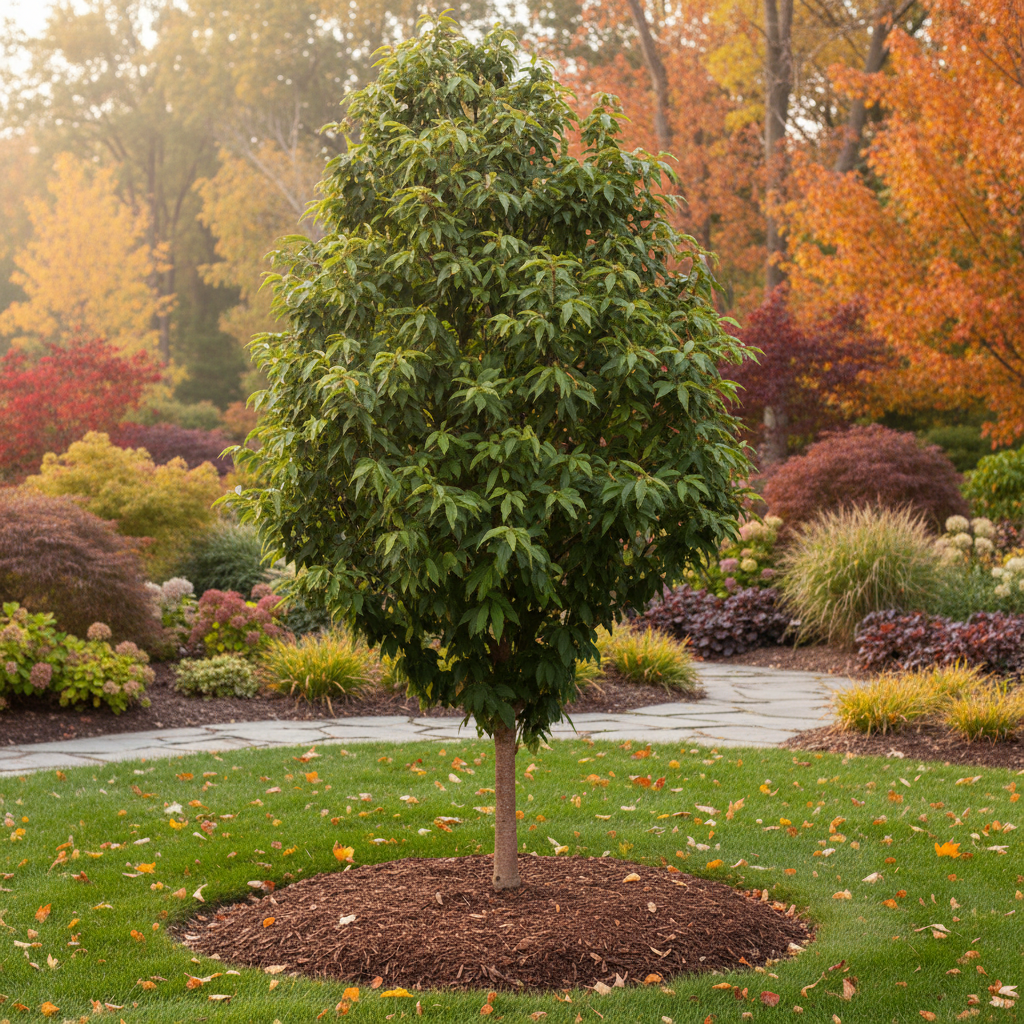
The Goldspur Amur Cherry is a hardy, dwarf tree ideal for small landscapes in cold climates. It features fragrant white spring flowers, dark green foliage, golden yellow fall colour, and distinct, exfoliating red gold bark and has a dense, narrowly upright or columnar growth habit ideal for small spaces, urban locations, hedging, screening, or as a vertical accent. In mid spring, fragrant, creamy white flowers appear in drooping clusters producing small, non significant black fruits which are attractive to birds. Best planted in full sun to part shade.

The Bur Oak is a massive, long lived shade tree native to central and eastern North America. It features large leaves with a distinct, variable shape, starting narrow at the base and widening toward the tip with rounded lobes and a deep, distinctive stem. The acorns are its most distinguishing feature, they are large with a deep, mossy fringed cap that covers half to nearly all of the nut. This heritage tree, often living 200 to 400 years, is one of the most drought resistant oaks due to a deep taproot that can reach over 4 feet in its first year. Highly shade tolerant as a sapling, but long-term, continued shading will likely limit their lifespan.
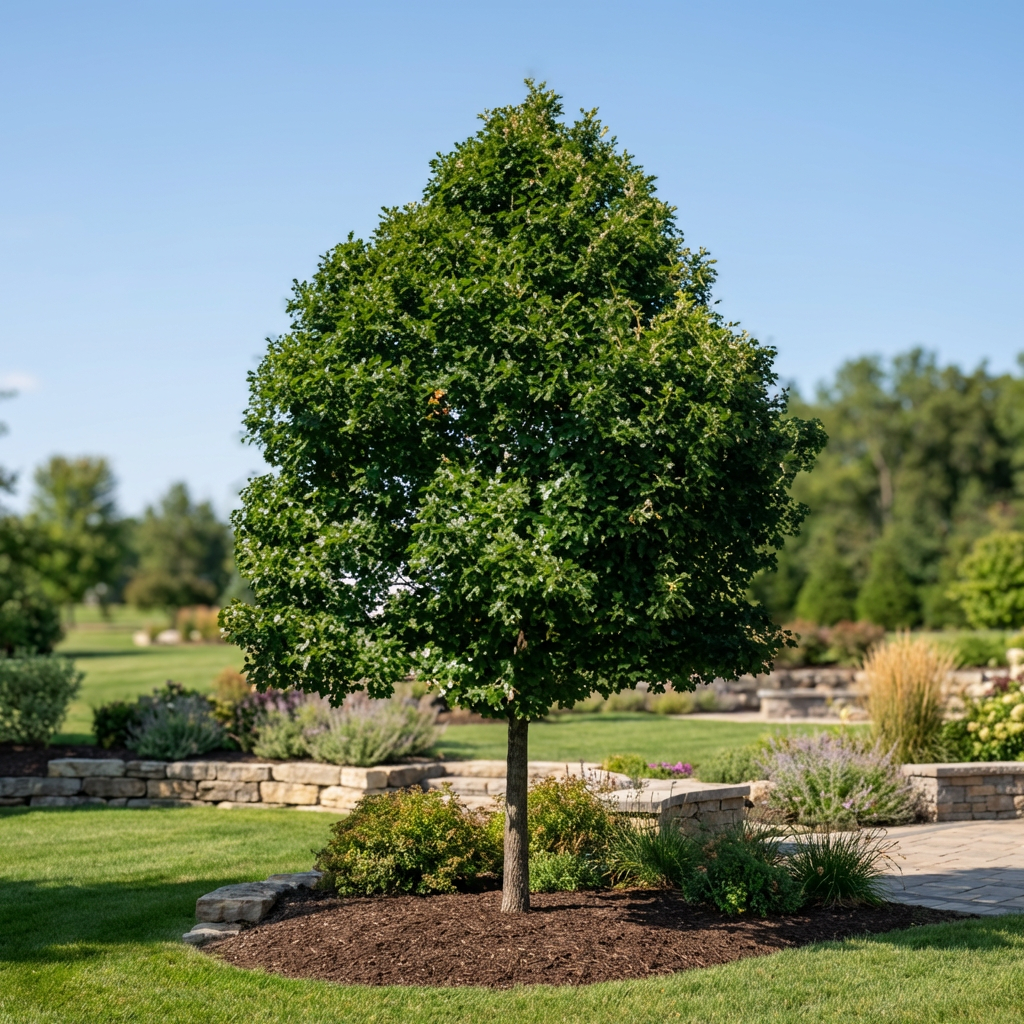
Northern Red Oak is a large, fast growing shade tree native to eastern North America, known for its symmetrical crown and vibrant fall foliage. It is a foundational forest species and a popular choice for urban landscaping due to its hardiness and tolerance to pollution. It is one of the fastest growing oaks, often adding more than 2 feet of height per year when young. The leaves are large and long with 7 to 11 pointed lobes ending in bristle tips. In autumn, they turn a brilliant scarlet, deep red, or rusty bronze. It produces large, bitter acorns with a shallow, saucer shaped cap. These acorns take two years to mature and are a critical food source for wildlife like deer, squirrels, and bears. Requires full sun for optimal growth, though it can tolerate moderate shade when very young.
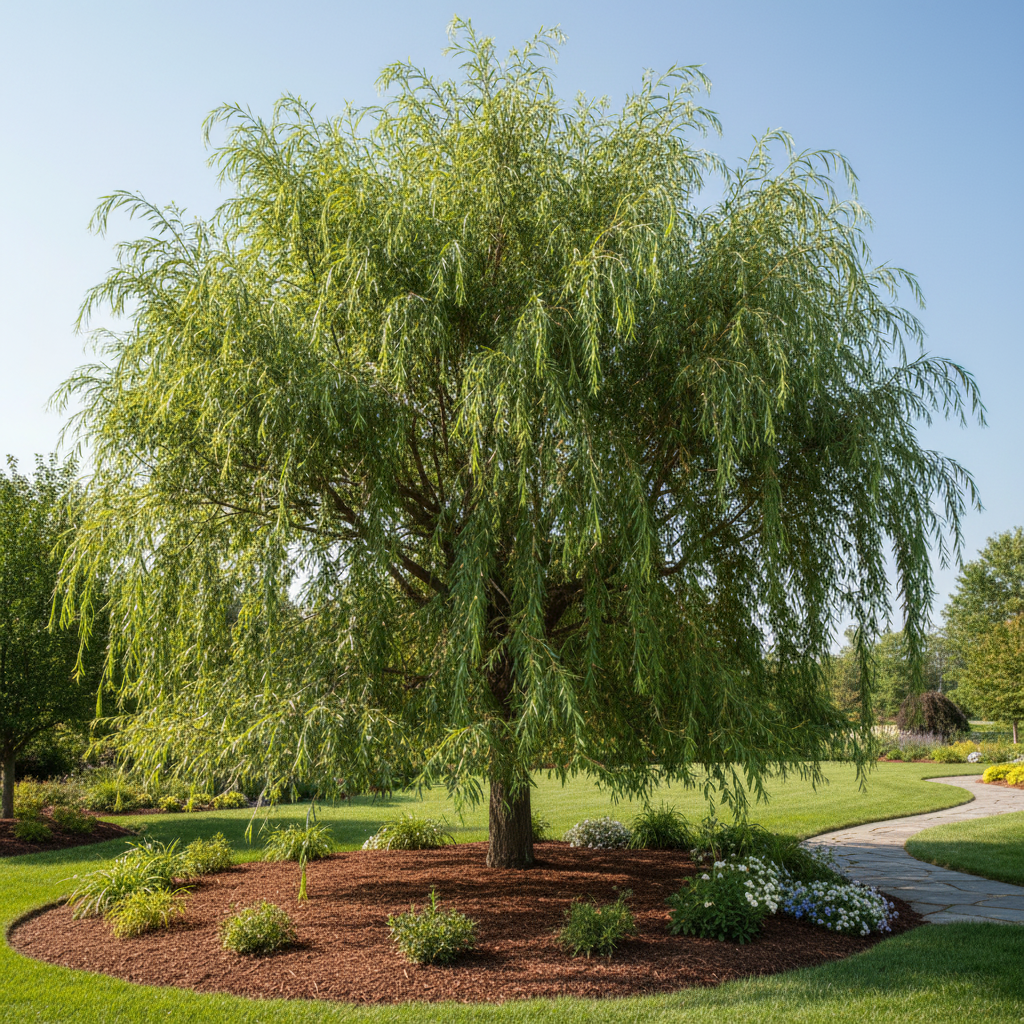
The Prairie Cascade Willow is a cold hardy, fast growing shade tree specifically developed in Canada to thrive in the harsh conditions of the northern prairies. It combines the weeping habit and golden winter stems of the Weeping Willow with the extreme hardiness and glossy foliage of the Laurel Willow. This variety is a dense, rounded tree with gracefully arching branches that weep toward the ground and features forest green, glossy foliage that turns yellow in the fall. Its golden yellow branches are particularly showy during the winter months. Requires full sun for optimal growth and thrives in moist to wet conditions and can even tolerate standing water.
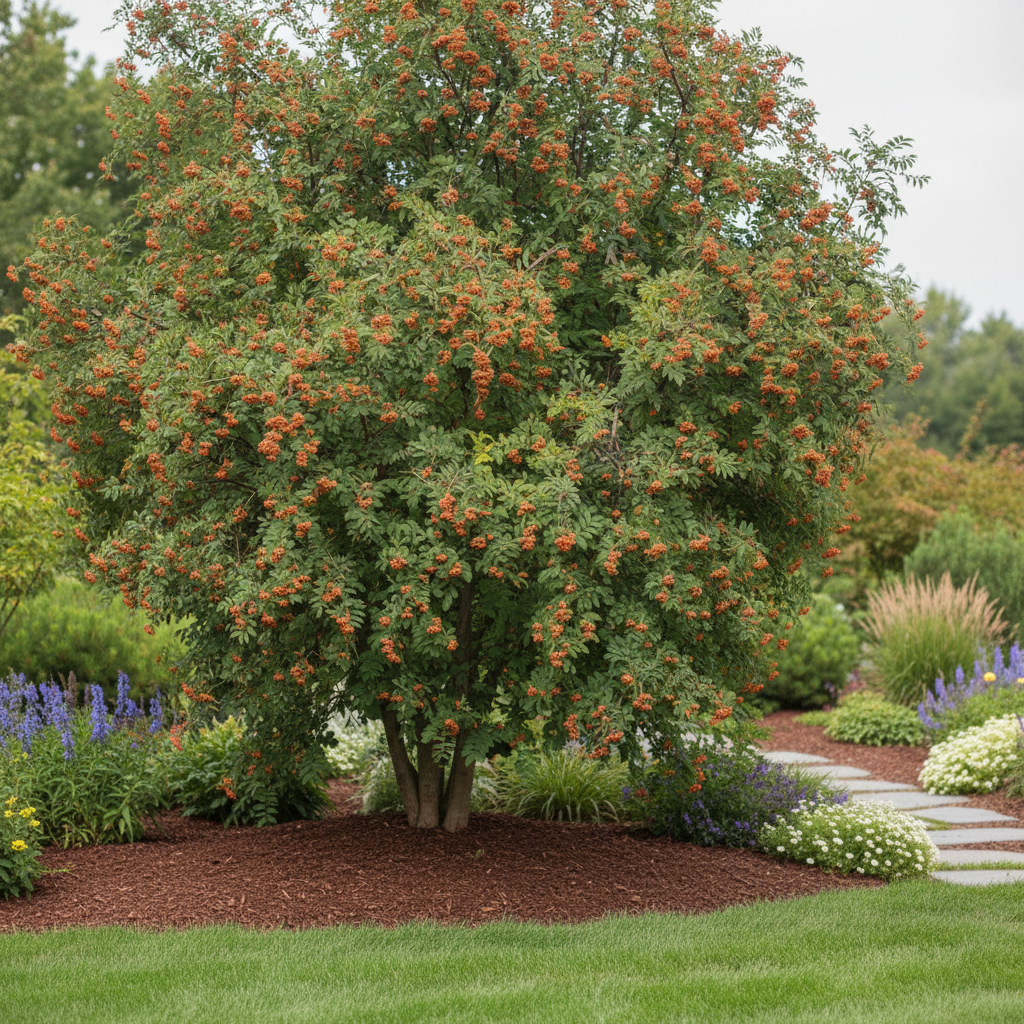
The American mountain ash is a small shade tree native to northeastern North America. It features a narrow, rounded crown and smooth, grey bark that becomes scaly as it ages. It has arched, dark green compound leaves divided into 11–17 sharply toothed leaflets. They turn vibrant shades of yellow, orange, and reddish purple in the fall. This variety produces dense clusters of tiny white flowers in late spring. These develop into bright orange red, berry like fruit that ripen in late summer and often persist through winter, providing a critical food source for birds. Plant in full sun for maximum density and growth.
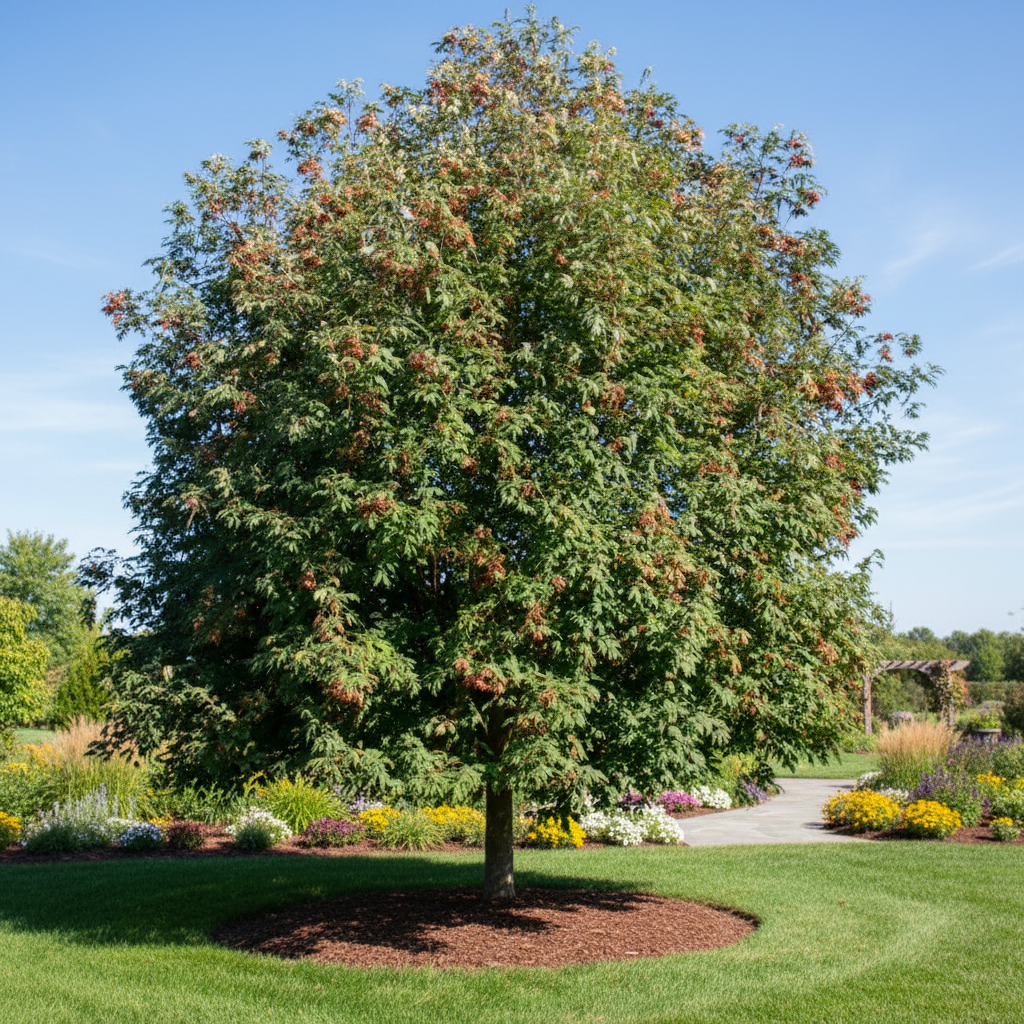
The Cardinal Royal Mountain Ash is a small to medium, ornamental shade tree prized for its upright, symmetrical shape and vibrant berry production. It features dark green compound leaves with silvery undersides that turn a brilliant rusty orange to flaming red in the fall. It produces flat topped clusters of white flowers in mid spring, followed by dense, showy clusters of bright red berries that persist into winter. Requires full sun and well drained soil.
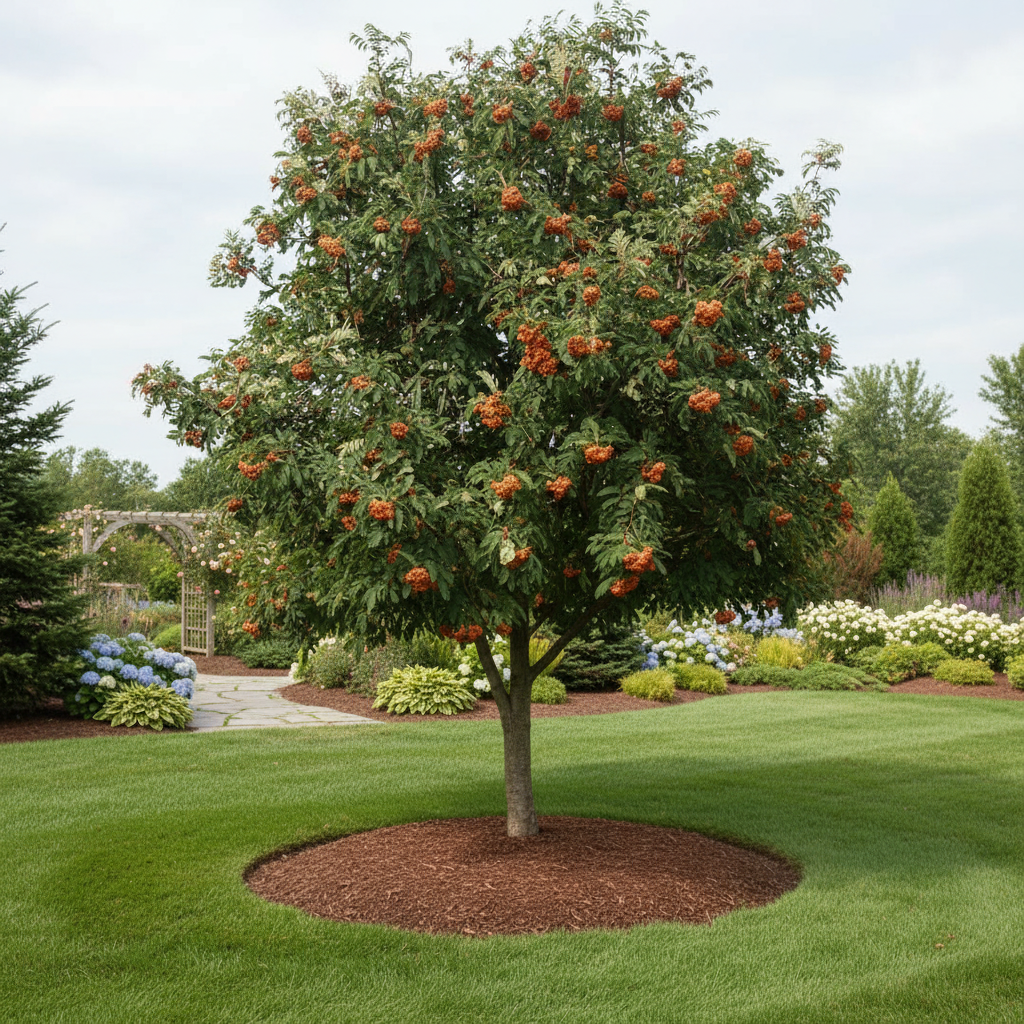
The Skybound Mountain Ash is a hardy, upright, and narrow shade tree often used for ornamental purposes. It produces showy clusters of white flowers in mid spring, followed by abundant orange to red berries that persist from early fall through winter. The dark green compound leaves turn a vibrant red or orange in the fall. Its narrow, oval form makes it an ideal choice for vertical accents in residential lots or areas with limited space. Requires full sun for optimal growth.
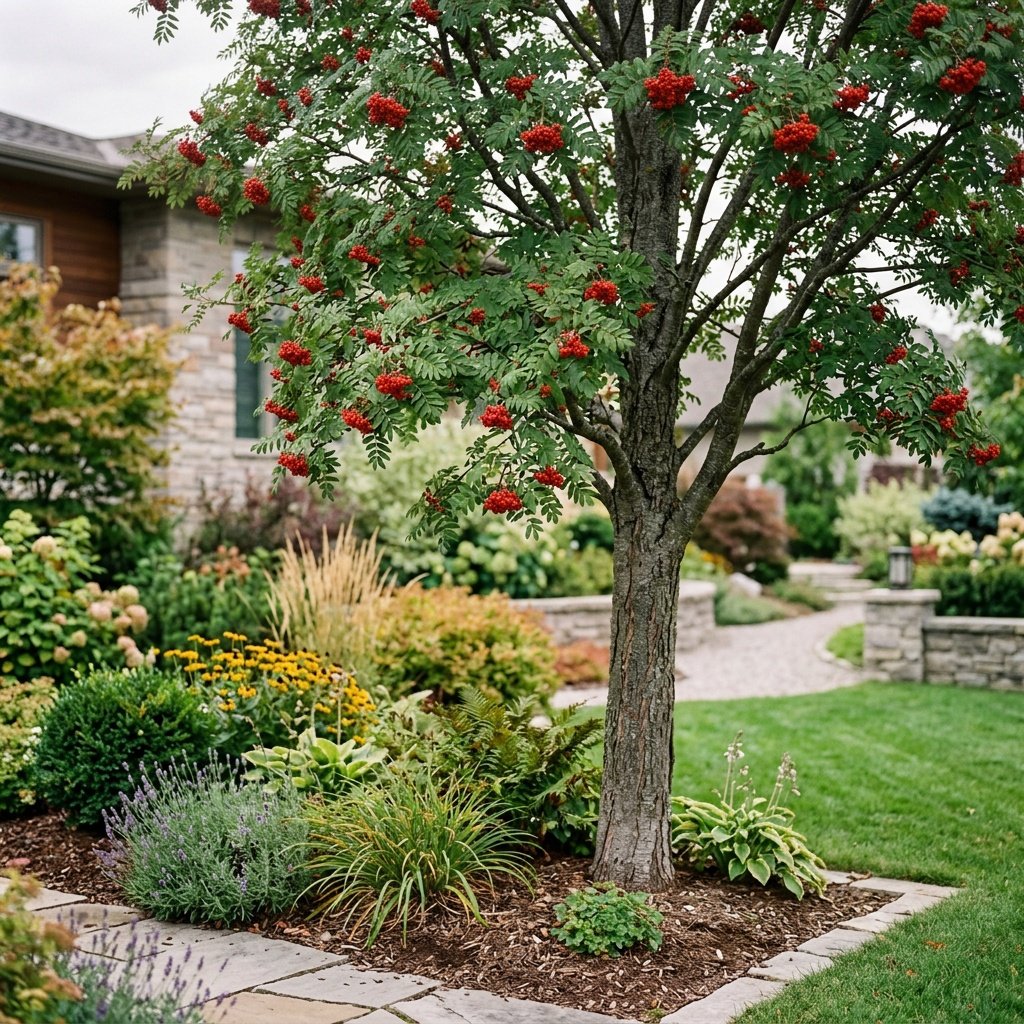
Russian Mountain Ash is a hardy ornamental shade tree valued for its year round visual appeal and resilience in cold climates. It has showy clusters of creamy white flowers which produce berries that often persist into winter, providing a critical food source for birds. It features a distinctive pyramidal or oval habit with dense, dark green pinnate foliage that turns a vibrant rusty orange or red, accompanied by heavy clusters of bright orange red berries. Full sun is required. While it can tolerate part shade, too little light can lead to poor fruit production and stunted growth.
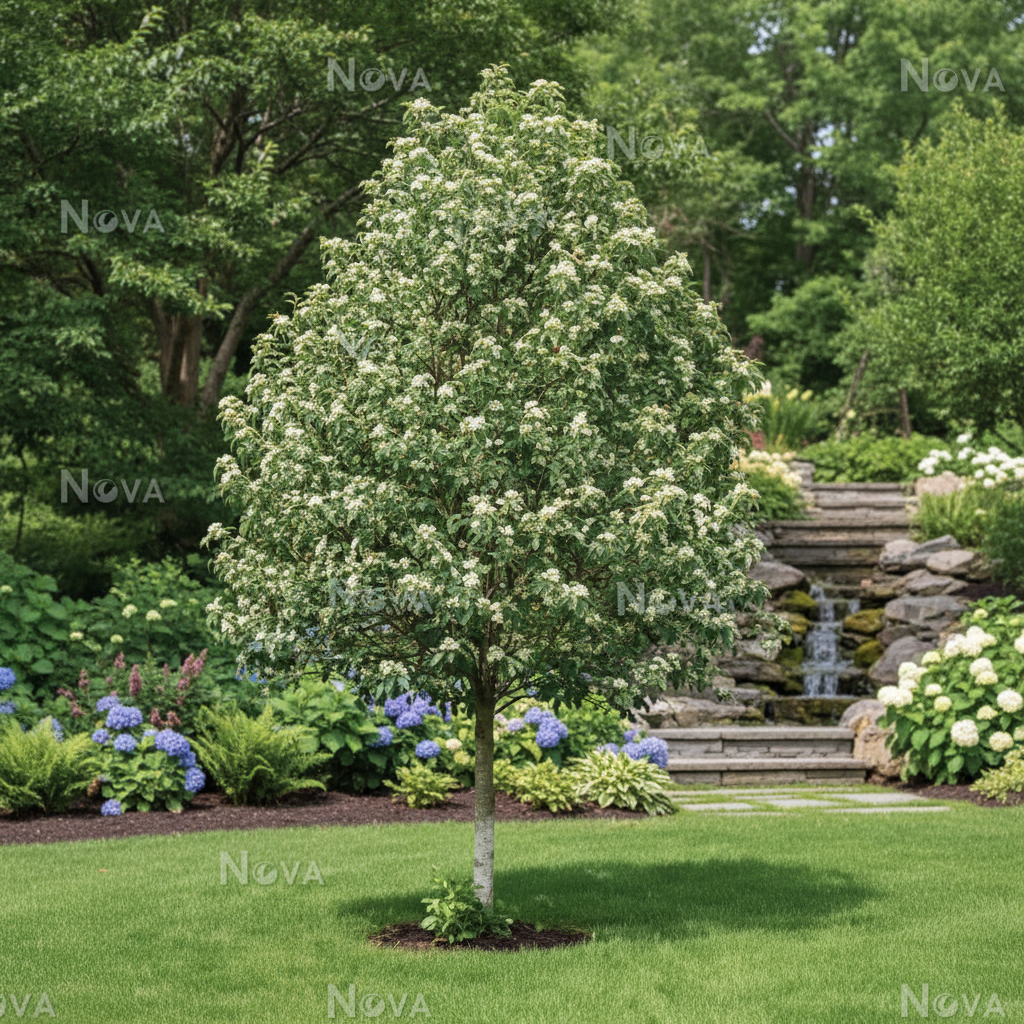
Oakleaf Mountain Ash is a unique hybrid shade tree known for its leaves that resemble those of an oak, despite being a member of the rose family rather than an actual oak or ash. It is a deciduous tree with a distinctive pyramidal to oval form and dark green leaves are uniquely lobed, mimicking the shape of an oak leaf, and often feature a silvery, fuzzy underside that turns a vibrant gold or yellow brown in the fall. In mid spring, it produces showy clusters of white flowers which develop into abundant orange red berries by late fall, which frequently persist into winter and are highly attractive to birds. Requires full sun to part shade for optimal growth, typically needing at least 6 hours of direct sunlight daily. While they prefer bright, sunny spots, they are adaptable to partial shade.
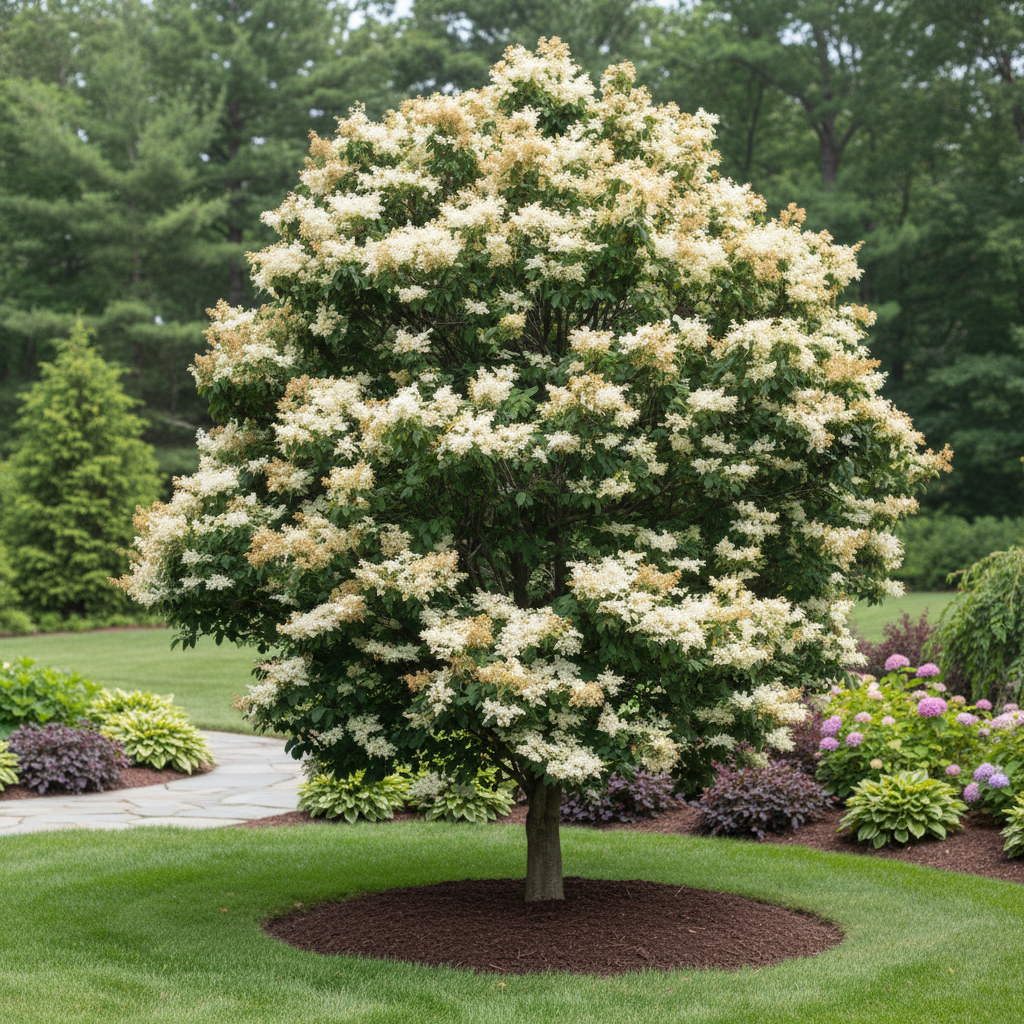
The Boulevard Japanese Tree Lilac is a compact, upright ornamental shade tree known for its fragrant creamy white flower plumes that bloom in late spring to early summer. The foliage is dark green and creates a great background to contrast the blooms. It features smooth gray bark that provides visual interest, while younger branches may show reddish brown peeling bark. Its primary uses include urban street side planting, residential shade, specimen planting, and screening or privacy hedging. Plant in full sun for optimal bloom, but will tolerate part shade.
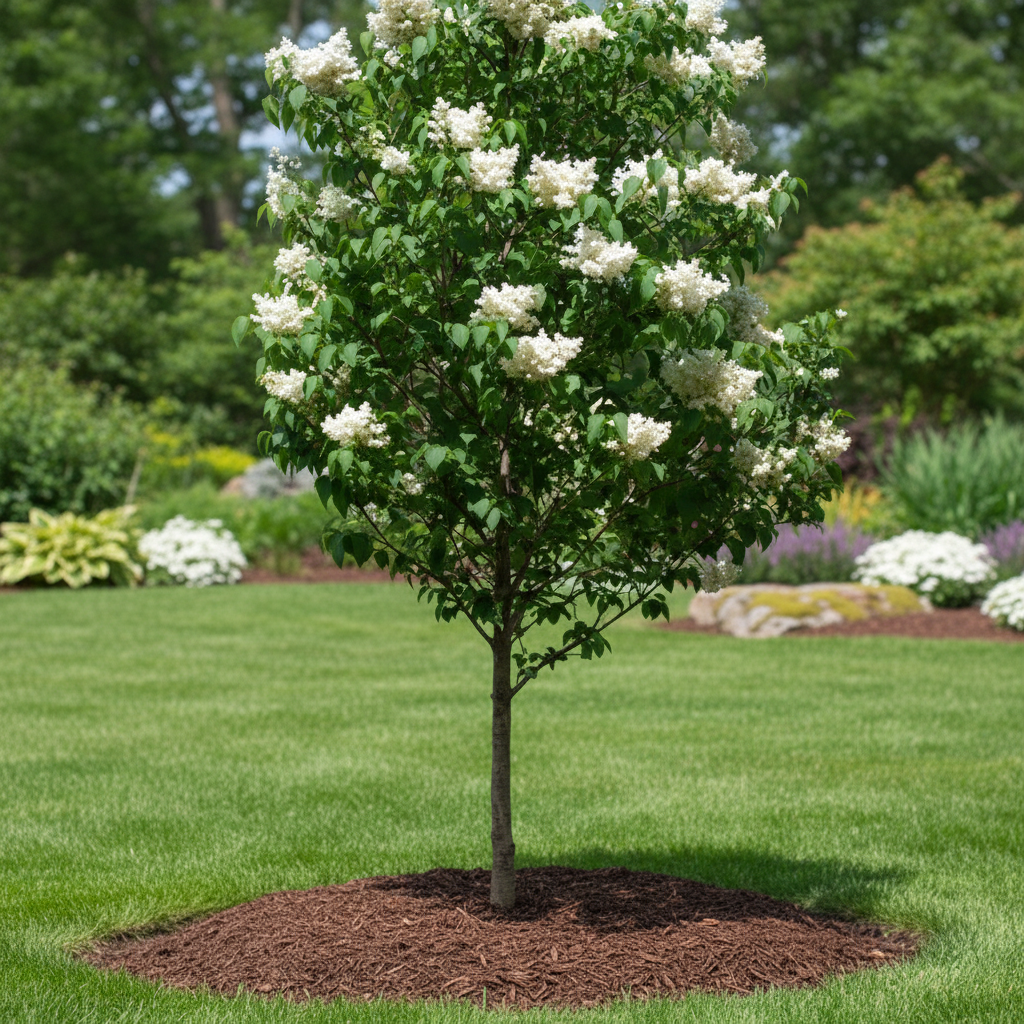
The Ivory Silk Japanese Lilac is a versatile, compact ornamental shade tree prized for its fragrant early summer blooms. This variety produces large, fragrant, creamy white cone shaped, flowers in late spring to early summer, extending the bloom season. It grows forming a structured, upright oval to rounded canopy and features reddish brown, cherry like exfoliating bark that provides winter interest. This variety is primarily used as a specimen tree, street tree, or privacy screen, thriving in urban conditions, patios, and small landscapes due to its high adaptability and low maintenance. Plant in full sun and well drained soil.
 ★ Featured
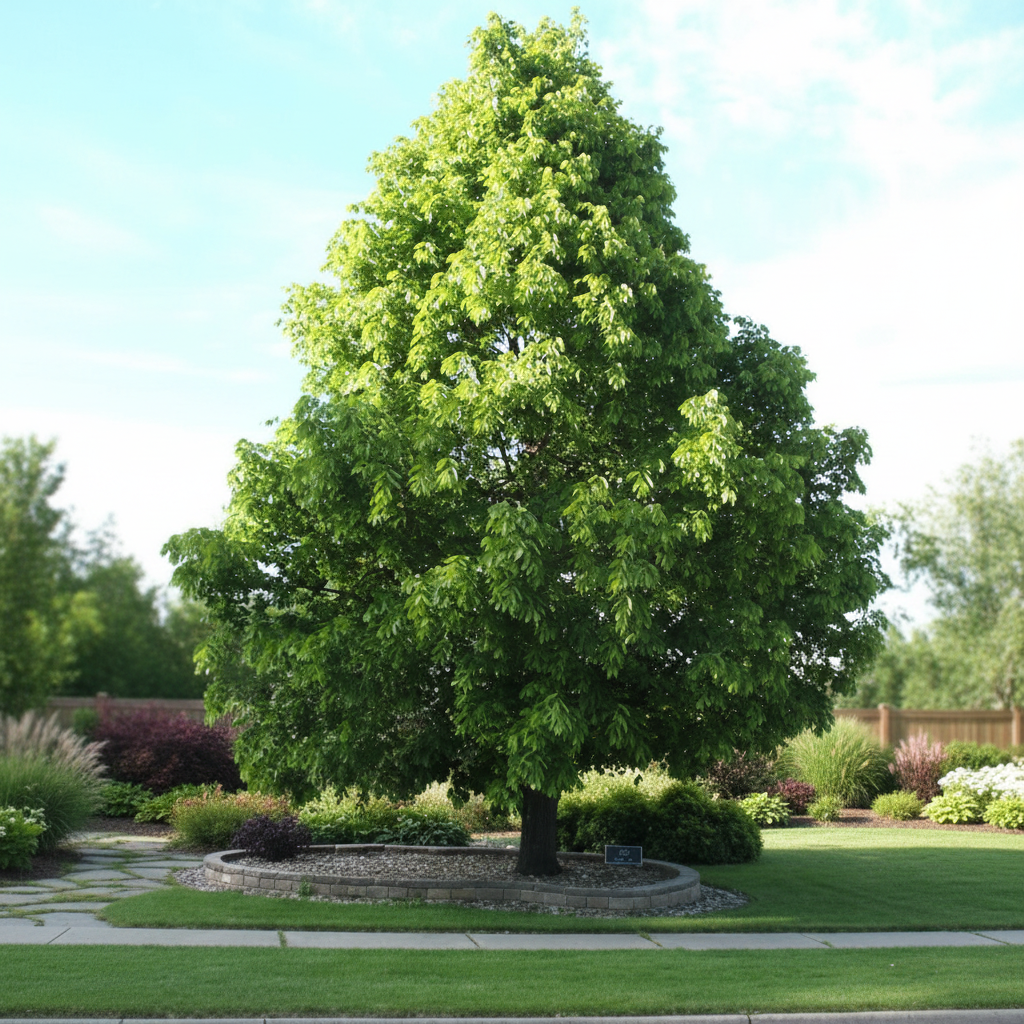
 The American Linden, also commonly known as Basswood, is a majestic native shade tree celebrated for its dense, heart-shaped foliage and highly fragrant summer flowers. It features large, dark green, heart shaped leaves with serrated edges. In autumn, the leaves typically turn a pale to golden yellow. Drooping clusters of small, fragrant, yellowish white blossoms appear in June or early July. These blooms are so attractive to pollinators that the tree is often called the "Bee Tree". This variety produces small, hard, pea sized nutlets attached to a wing like leaf. Thrives in full sun to partial shade, requiring at least 6–8 hours of direct light daily for optimal flowering and growth.
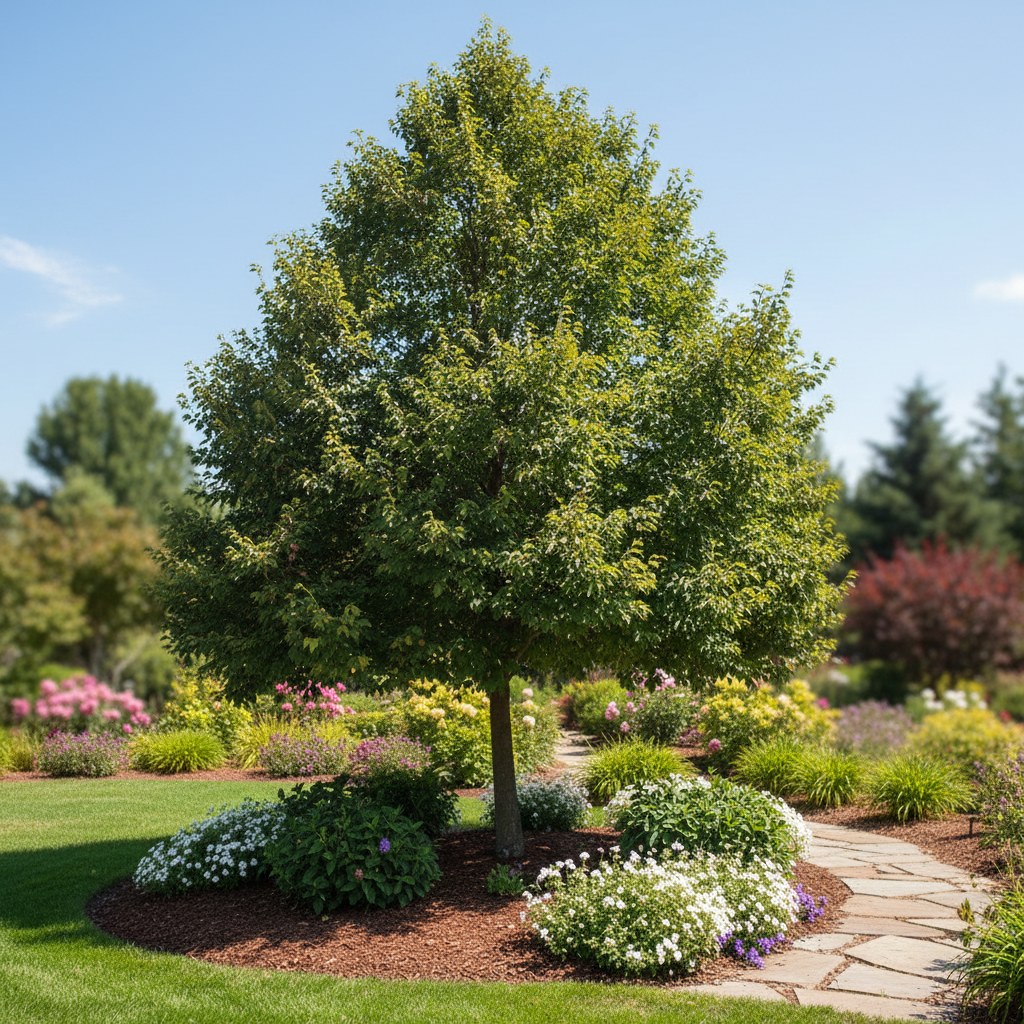
The Littleleaf Linden is a deciduous shade tree native to Europe, prized in North America for its symmetrical, pyramidal shape and fragrant summer blooms. It features small, dark green heart shaped leaves that are typically 1.5 to 3 inches long. In autumn, the foliage typically turns a pale yellow or chartreuse. This variety produces clusters of small, creamy yellow flowers in late June and July which are highly attractive to bees. It has a moderate growth rate and high tolerance for pollution and various soil conditions making it ideal for planting as a street tree, for boulevard plantings, or in parking lot islands because it handles compacted soil and air pollution effectively. It can also be used as a specimen in moderate to large spaces. Plant where there is a minimum of 6-8 hours of sun daily for maximum growth, density, and bloom.
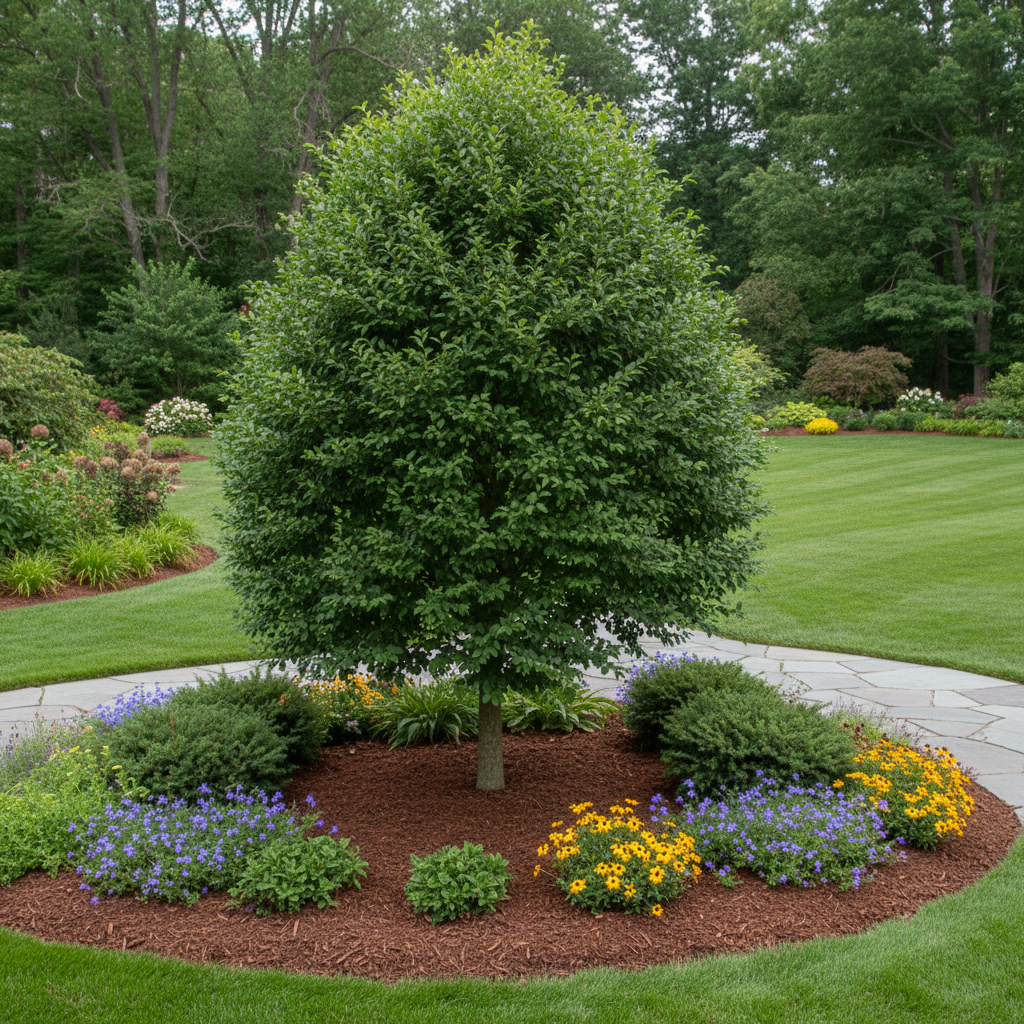
The Greenspire Linden is a popular, durable, and low maintenance deciduous shade tree known for its strong, symmetrical, and pyramidal shape. It features fragrant yellow flowers in early summer, glossy dark green foliage that turns gold in fall, and high tolerance for urban pollution and varied soils. It is ideal for landscaping specimens, parks, and parking lot islands due to its tolerance to salt and urban stress. Plant where there is 6-8 hours of sun daily for maximum growth, density, and bloom.
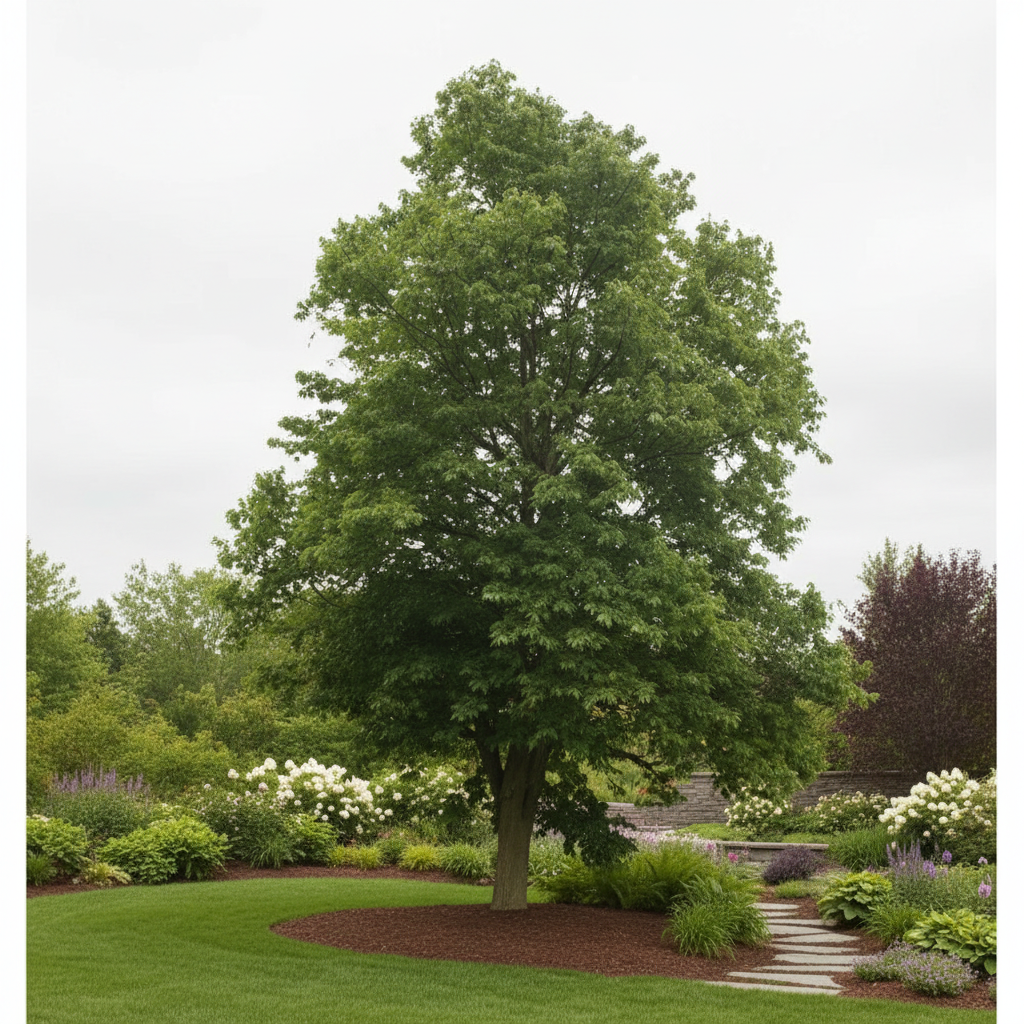
The Glenleven Linden is a fast growing shade tree known for its symmetrical oval canopy and "urban toughness". It is a hybrid between the American Linden and the Littleleaf Linden, combining the vigor of one with the refined appearance of the other. This variety maintains a neat, pyramidal to oval crown and a characteristically straight trunk and features large, dark green, heart shaped leaves that turn a striking bright yellow in the fall. Noted as being one of the fastest growing lindens, it is commonly used as a formal shade tree, street tree, or windbreak due to its adaptability to pollution and tight spaces. Thrives in full sun and is adaptable to both dry and moist locations.
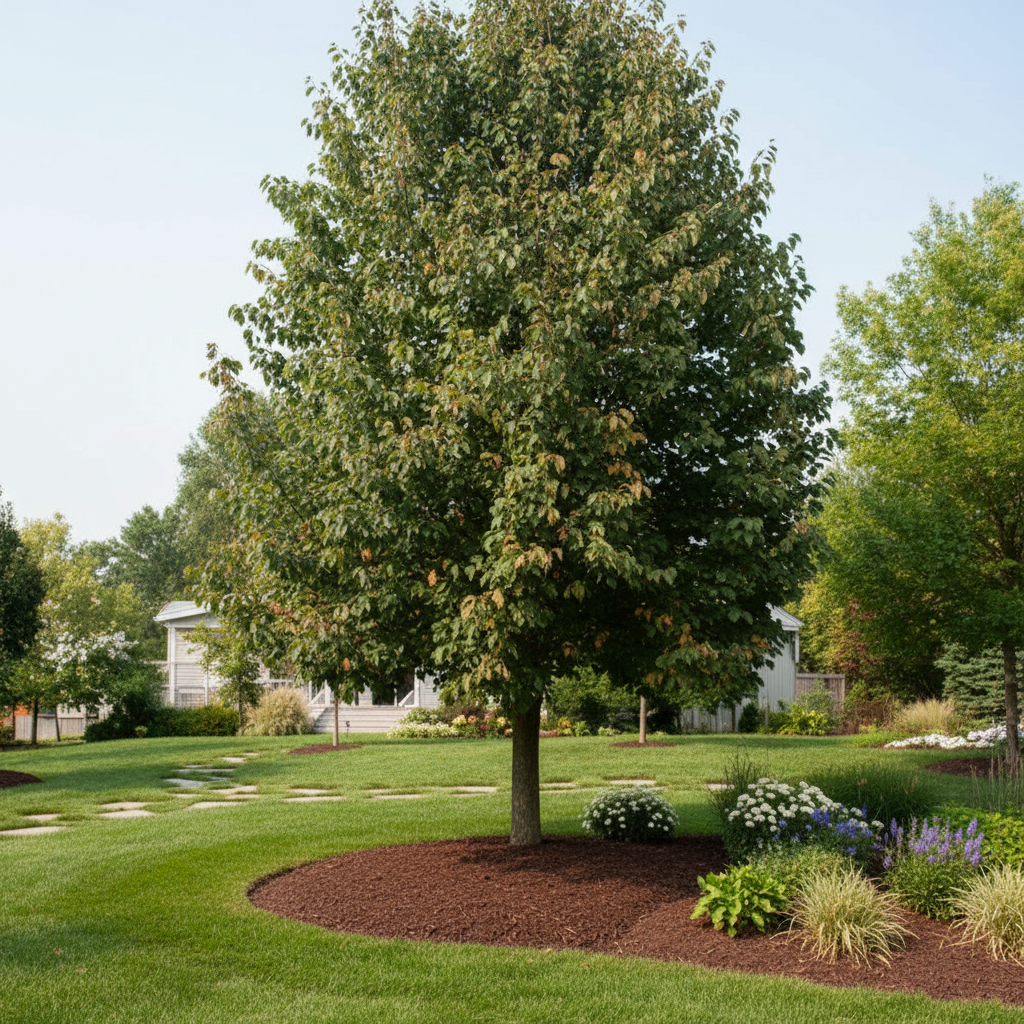
The Harvest Gold Linden is a hardy, hybrid shade tree developed in Manitoba, and is a cross between the Littleleaf Linden and the Mongolian Linden. It features a strong central leader with a symmetrical, teardrop or pyramidal crown. It has glossy, heart shaped dark green leaves that turn a brilliant golden yellow in the fall. This variety produces fragrant, small yellow flowers in early summer that are highly attractive to bees and other pollinators. As the tree matures, it develops unique peeling bark that adds winter interest to the landscape. Ideal as an ornamental specimen, street tree, or shade tree in urban environments due to its tolerance of harsh conditions. Plant in full sun to part shade for the best results.