
Browse our nursery selection online and plan with confidence. We confirm availability before payment, so there are no surprises at pickup.
 ★ Featured
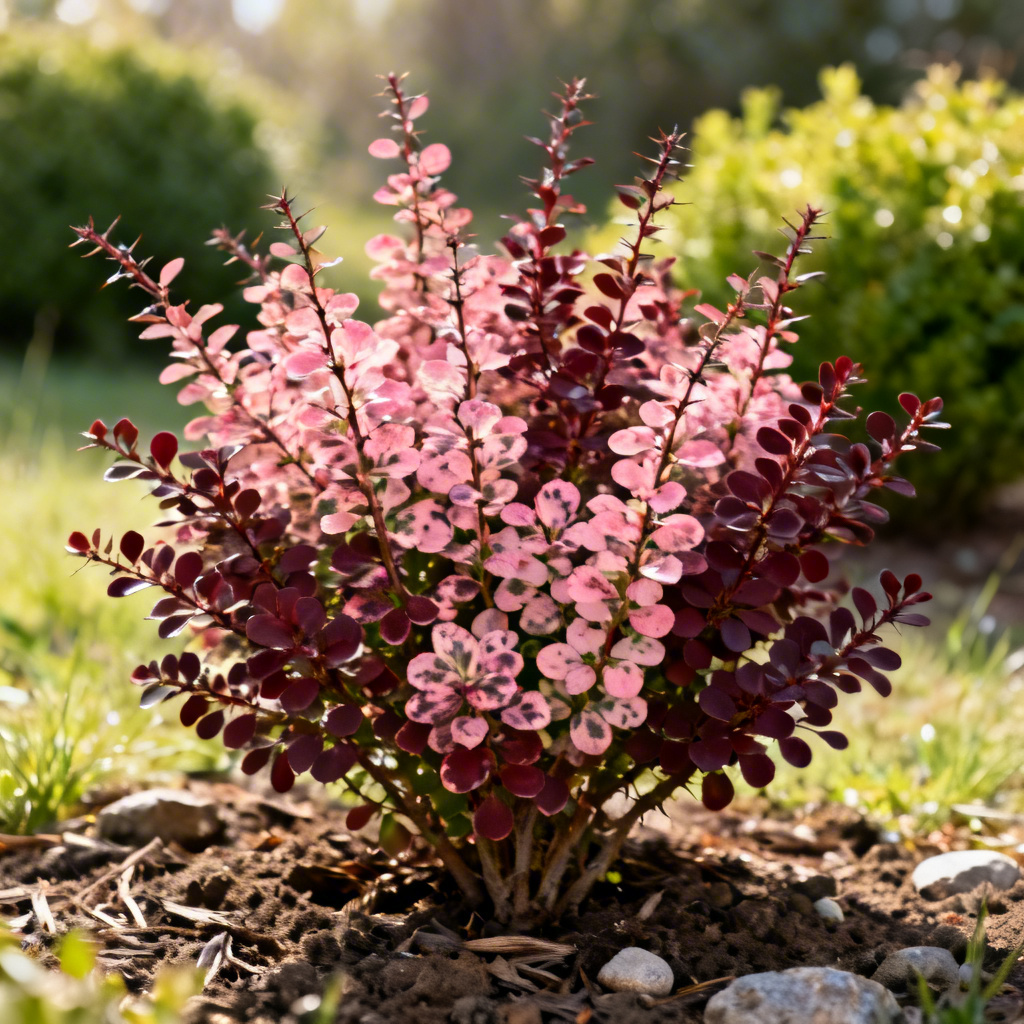
 The Rose Glow Barberry is a dense, thorny shrub valued for its variegated foliage, which emerges with mottled pink, white, and purple, turning deep red in summer. It is exceptionally hardy and drought tolerant once established, making it a reliable choice for low maintenance landscape accents, borders, and hedges. While it can tolerate partial shade, full sun is necessary to achieve the most vibrant foliage colour.
 ★ Featured
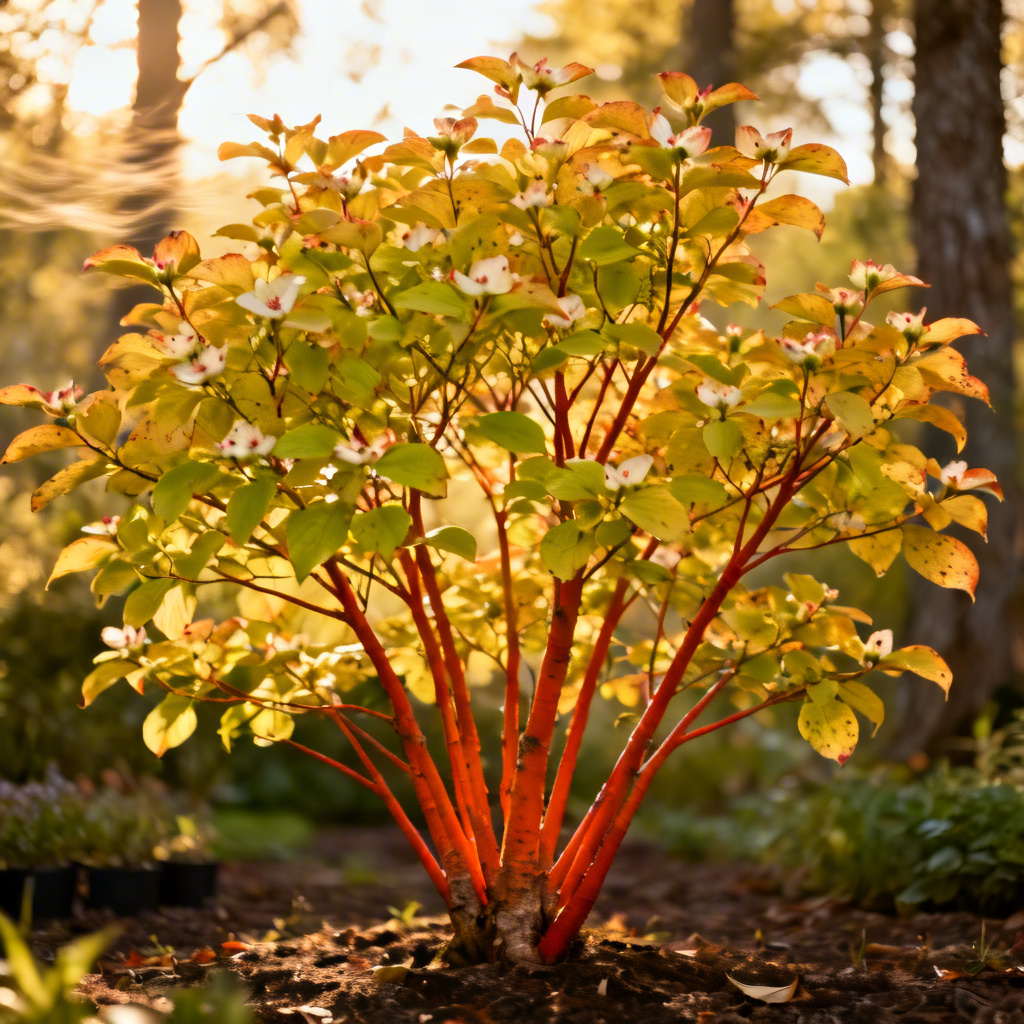
 Prairie Fire Dogwood is a hardy, fast growing shrub known for its dramatic year round colour changes, including golden yellow summer foliage and vibrant red winter stems. New leaves emerge as bright golden yellow, eventually fading to a soft chartreuse or light green in the summer heat with clusters of small, creamy white flowers that appear in late spring. The foliage transforms into a vivid palette of bright reds, oranges, and occasionally purples in the fall. After the leaves drop, the shrub reveals flaming orange red or tomato orange stems that provide striking architectural interest against snow. Small white or bluish white ornamental berries often persist into early winter, attracting birds. It is a versatile choice for hedges, mass plantings, or as a focal point in landscapes due to its adaptability to various soil and light conditions. While it can tolerate shade, its golden foliage is most vibrant when grown in full sun.
 ★ Featured
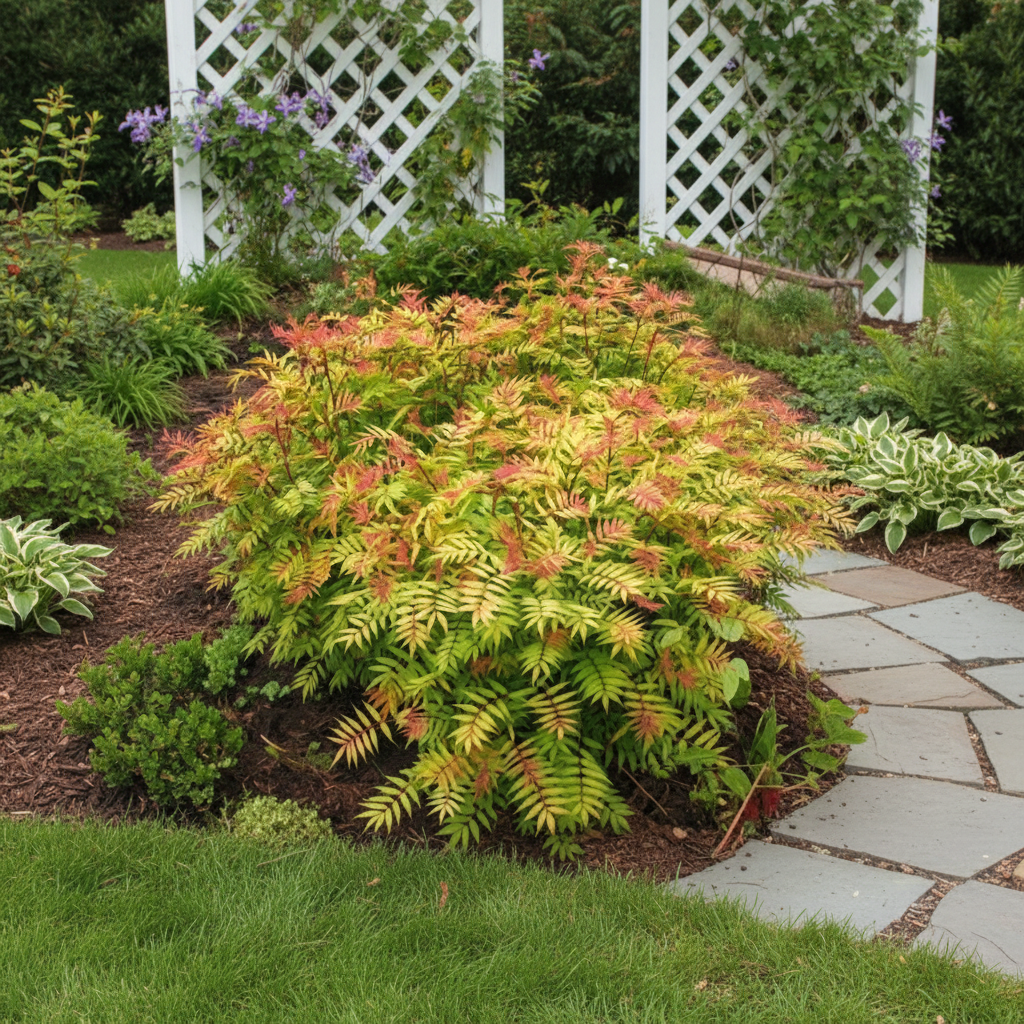
 Ash Leaf Spirea is a fast growing, hardy shrub known for its fern like foliage, early reddish bronze spring colour, and large white plume flowers in summer. This variety is excellent for mass planting and erosion control due to its suckering nature. Does best in full sun for best foliage colour but will tolerate part shade.
 ★ Featured
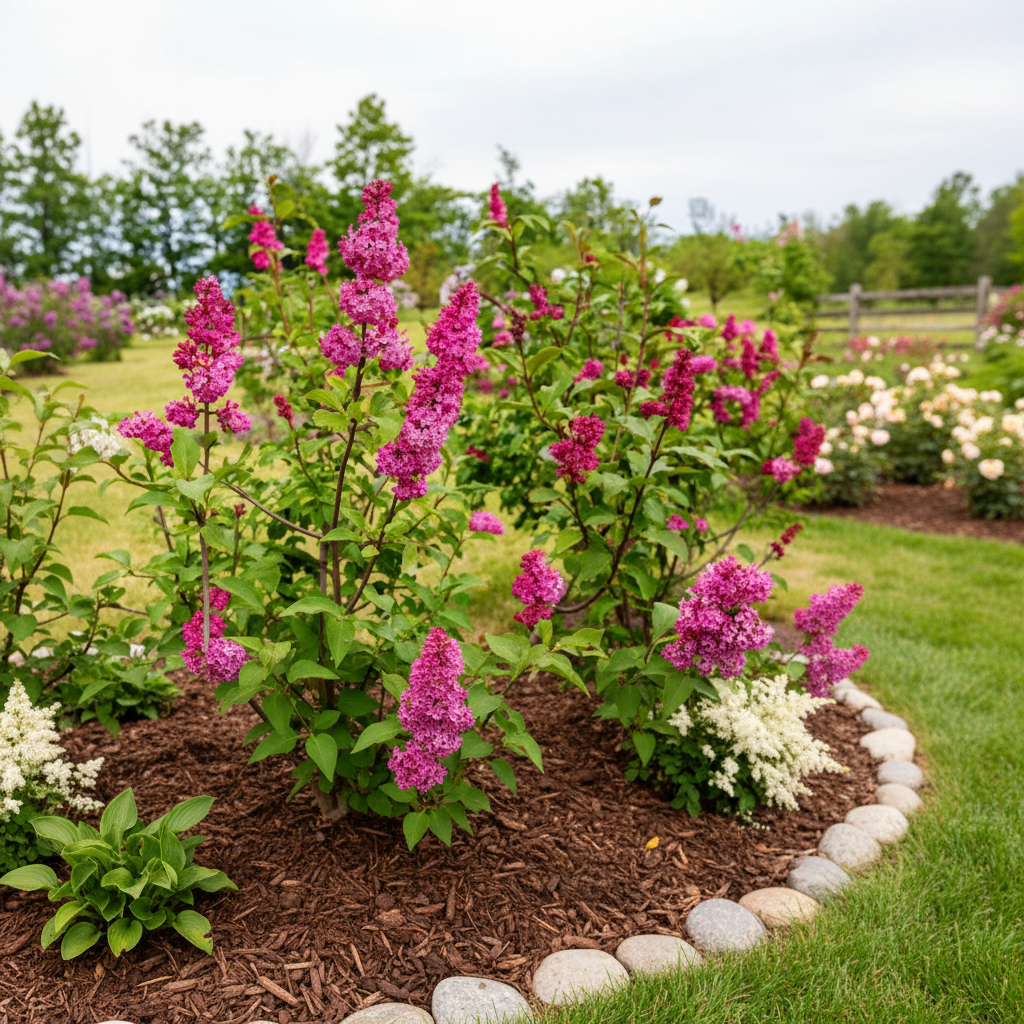
 Miss Canada Lilac is a non suckering, extremely hardy, late blooming hybrid famous for having some of the brightest pink flowers of any lilac variety. It produces large, vibrant rosy pink blooms that emerge from reddish purple buds in late June. Its blooming period starts about 2–3 weeks after common lilacs, making it a perfect choice to extend the lilac season. Common uses include dense, colourful hedge rows or privacy screens, background planting, or using it as a focal point specimen. For maximum bloom, plant in full sun.
 ★ Featured
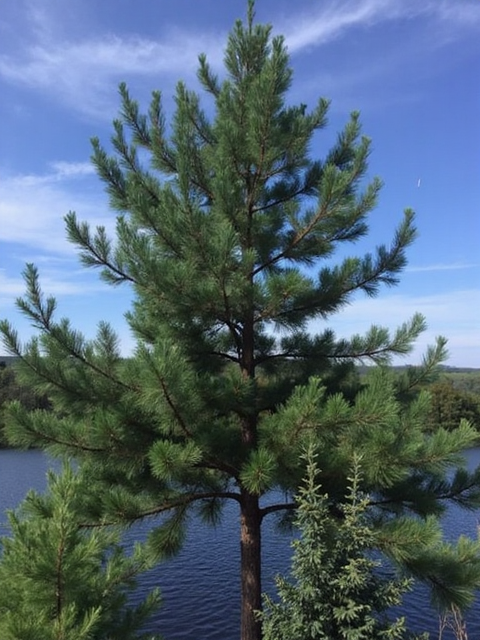
 Red pine is a long lived evergreen native to eastern North America, recognized for its tall, straight growth and distinctive reddish brown bark. It features shiny, dark green needles that grow in clusters of two. The bark is thick and reddish brown, divided into large, flaky plates as the tree matures. In the upper crown, the bark may appear bright orange red colour. It is a "self-pruning" tree, meaning it naturally sheds lower and inner needles as it matures. Red pine is highly shade intolerant and requires full sun to thrive.
 ★ Featured
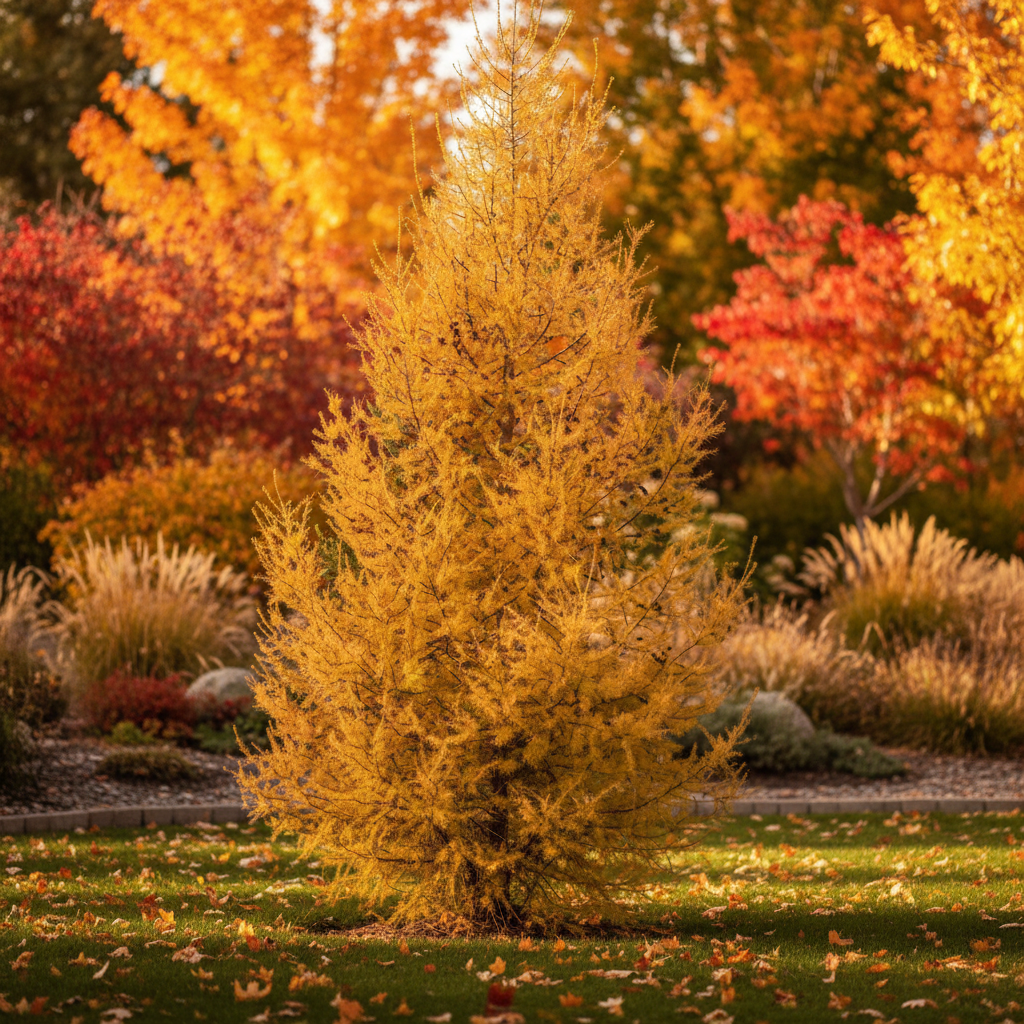
 Tamarack is a unique, native North American deciduous conifer that turns brilliant golden yellow before shedding its needles in the fall. It is a medium sized, slender tree with a straight trunk, horizontal branches, and soft needles. It also produces small, red wine coloured young cones that mature into small, brown cones. Commonly found in muskegs, bogs, and swamps, but it can adapt to drier, well drained soils. Requires full, direct sunlight.
 ★ Featured
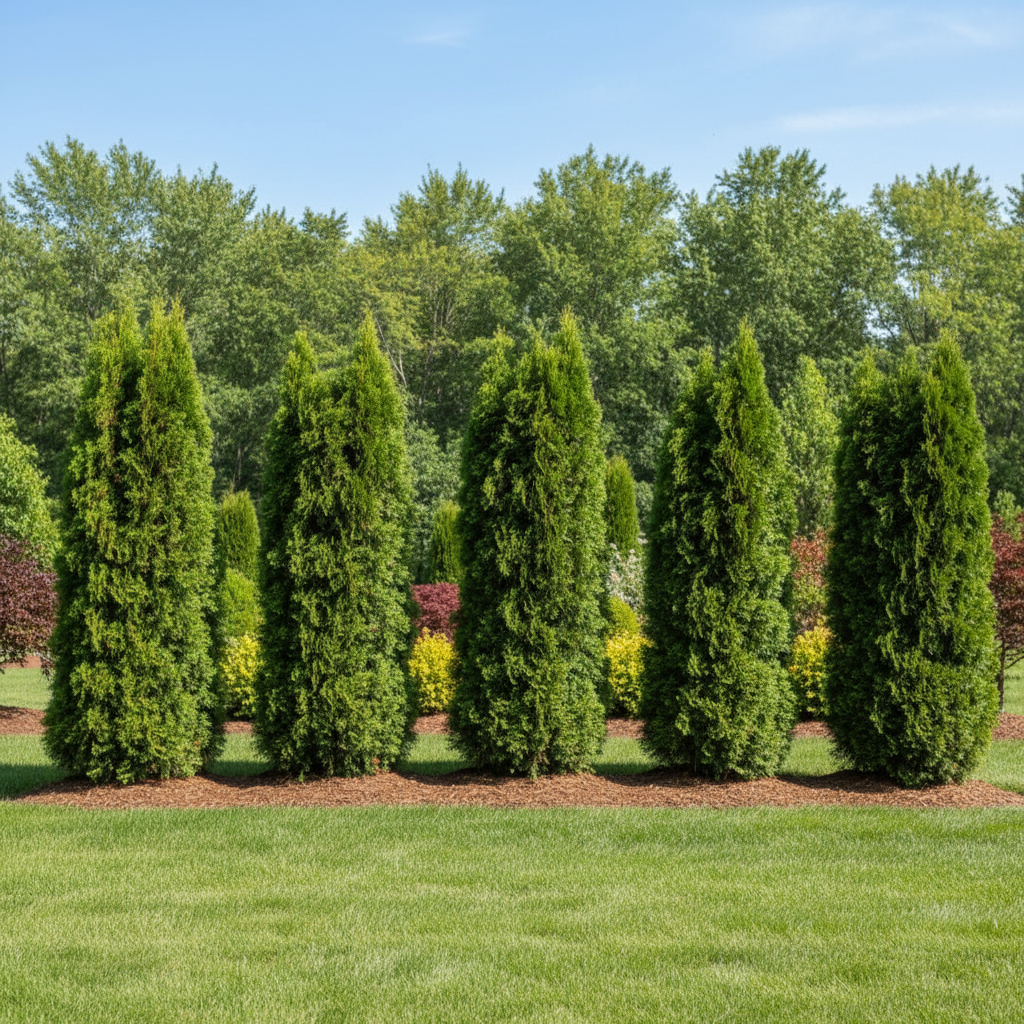
 The Skybound Cedar is a hardy, columnar evergreen known for its dense, dark green foliage and exceptional cold resistance. It is a popular improvement over the Brandon cedar, offering a richer green colour that resists browning during winter months. Featuring soft, feathery, scale like sprays that stay dark green year round, it also maintains a rigidly columnar or pyramidal form, making it an ideal "pillar" for landscape design. Performs best in full sun to part shade, however, full sun is recommended for maximum foliage density.
 ★ Featured
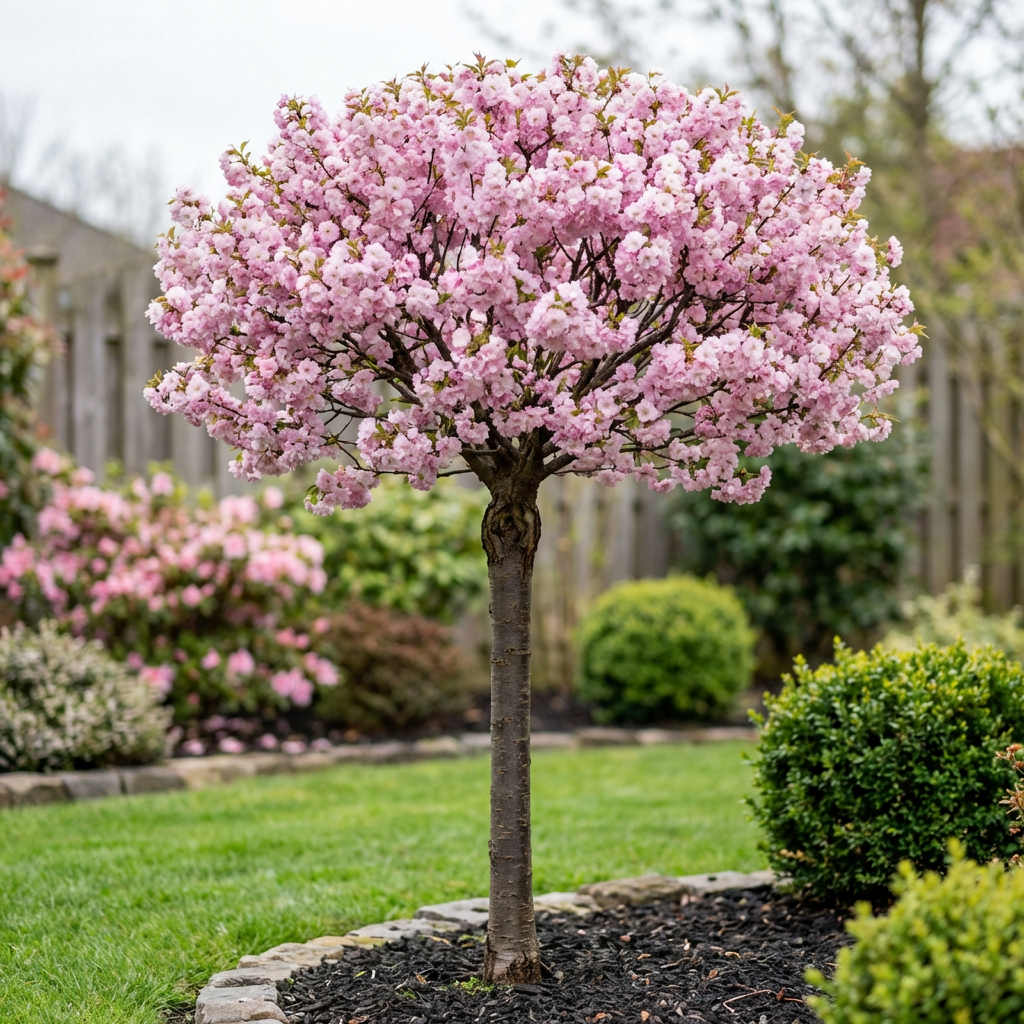
 A Flowering Almond Standard is an ornamental shrub that has been grafted onto a straight trunk to create a tree-like lollipop form. This variety features intense double pink flowers appear in May, often before foliage emerges. These trees are not grown for fruit, but solely for their exceptional spring display. Given its compact form it is ideal as a accent specimen, patio tree, or in small yards or gardens. Plant in full sun for optimal bloom, but will tolerate some shade.
 ★ Featured
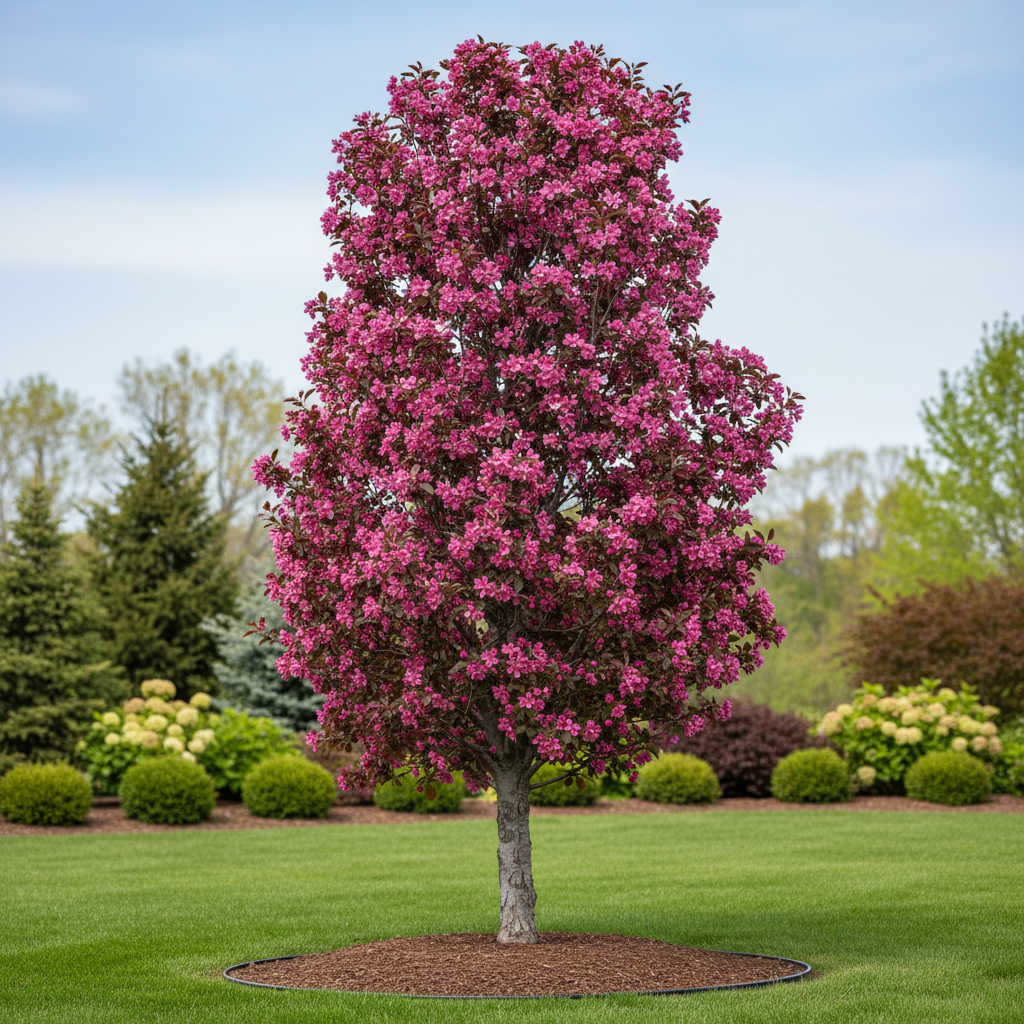
 The Gladiator Flowering Crabapple is a highly hardy, narrow columnar tree featuring fragrant pink spring flowers, deep purple foliage, and small, showy, dark red fruit. This disease resistant, low maintenance, ornamental tree has bright rosy pink flowers cover the branches in mid spring, followed by glossy purple leaves that maintain their deep colour all summer. Small, reddish purple ornamental fruits appear in late summer and fall. This variety is an ideal choice for small yards, boulevards, or as a vertical accent in tight spaces. Requires full sun to keep the deep purple foliage colour.
 ★ Featured
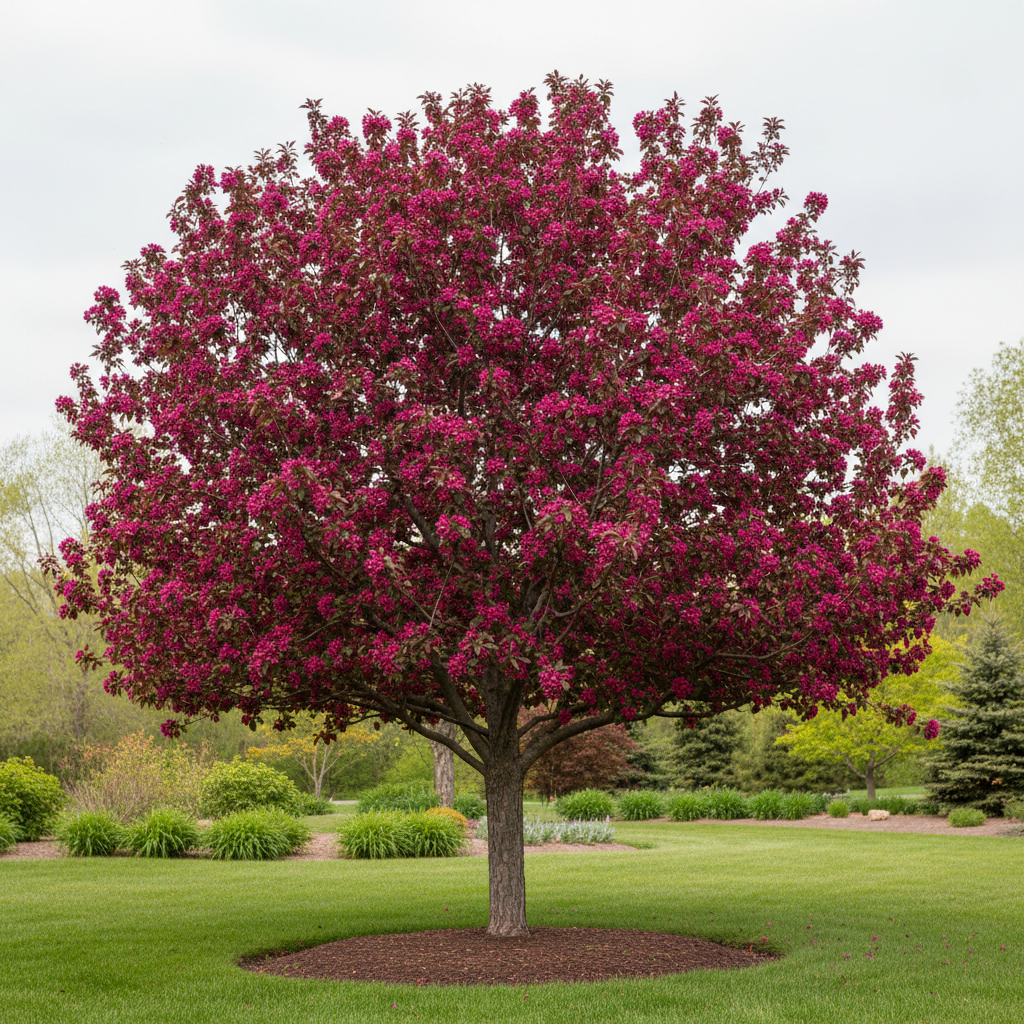
 The Royalty Crabapple is a highly popular ornamental tree prized for its dramatic, deep purple foliage and vibrant spring blossoms. This variety features glossy dark purplish red leaves that emerge in spring and maintain their rich hue throughout summer. In the fall, the foliage transforms into shades of vivid red, orange, or crimson. Also, large, fragrant purplish red or crimson single flowers blanket the branches in mid spring, followed by small, dark red or purple cherry like fruits that mature in the fall. These fruits are persistent, meaning they hang on the tree into winter, providing visual interest and food for birds. Requires full sun to achieve the best foliage colour and flower production.
 ★ Featured
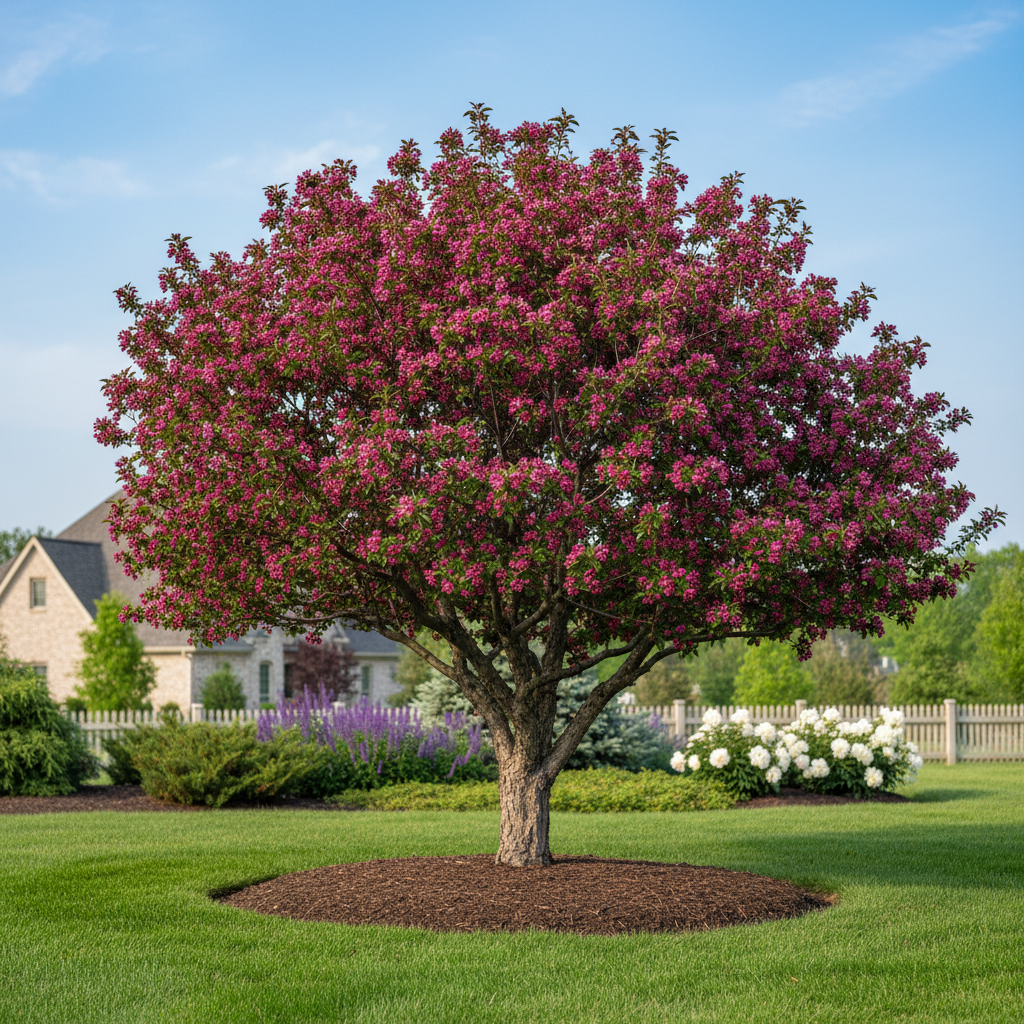
 The Scarlett Crabapple is a compact, highly ornamental tree celebrated for its dramatic seasonal colour changes. The leaves emerge as a rich copper purple or deep red and transition to a bronzy green in summer before turning fiery shades of orange, scarlet, and yellow late in the fall. In mid spring, the tree is covered in clusters of fragrant, dark pink to crimson purple blossoms which produces small, glossy, deep purple or burgundy fruits that persist late into winter, providing a food source for birds. Thrives in full sun for the best floral, foliage and fruit displays, though it can tolerate part shade.
 ★ Featured
 The Starlite Crabapple is a highly disease resistant, cold hardy, ornamental tree known for its upright growth, fragrant white spring blooms, and exceptional disease resistance. Developed in Manitoba by Jeffries Nurseries, it is a cross between the 'Spring Snow' and 'Rosthern' varieties, specifically designed to withstand harsh northern climates while maintaining glossy, healthy foliage. It features an upright, pyramidal to oval crown that produces abundant fragrant white flowers from red buds in mid to late spring. The foliage is glossy dark green in the summer, turning a bright yellow gold in the fall. Small, red fruits persist on the branches throughout the winter, providing visual interest and a food source for birds. For optimal bloom and fruit production plant in full sun but will tolerate part shade.
 ★ Featured
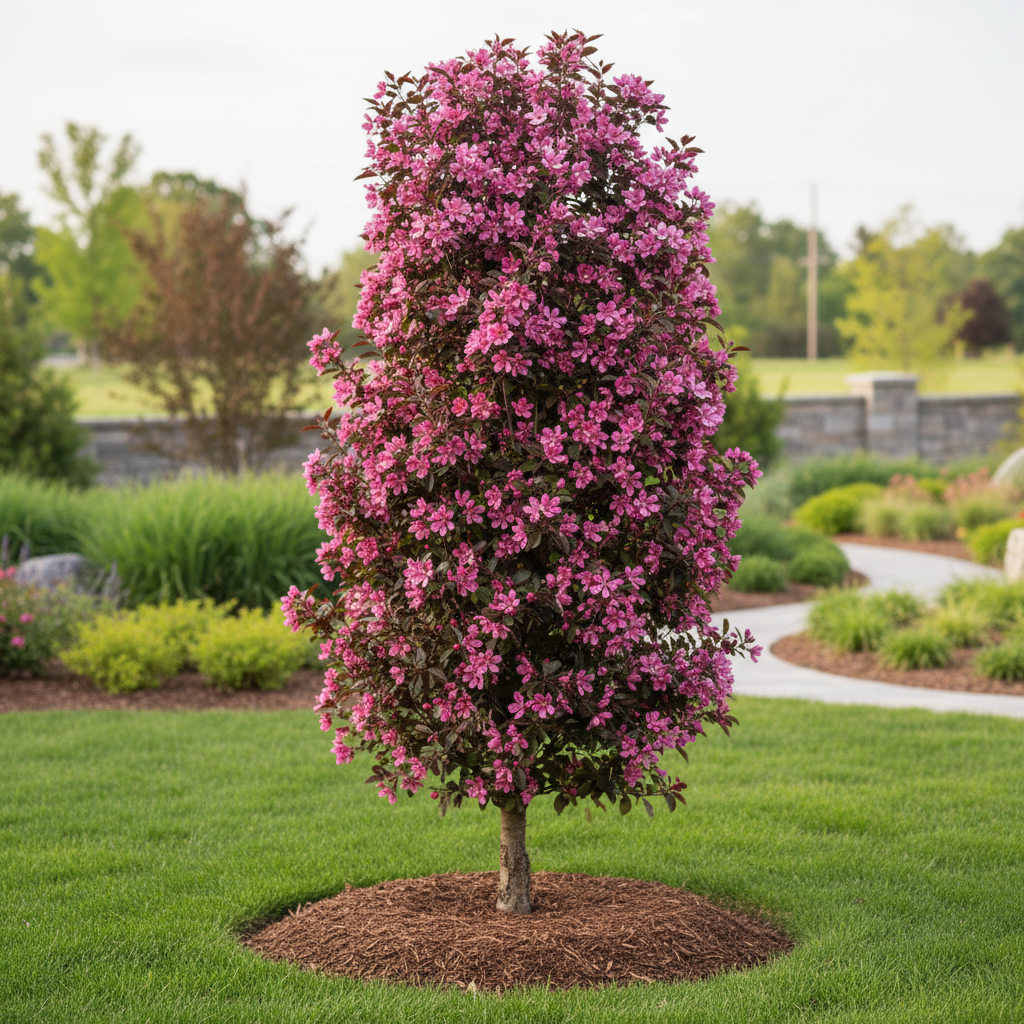
 The Midnite Spire Crabapple is a narrow, upright ornamental tree ideal for small spaces or privacy screens. Extremely narrow and upright (columnar), it features exceptional glossy purple leaves that emerge burgundy in spring and maintain their deep colour all summer. In mid spring, it produces airy clusters of fragrant pink blossoms before the leaves fully emerge. Small to medium sized purple or red fruits appear in fall and often persist into winter, providing food for birds. This variety is an ideal alternative to Swedish Aspen for those wanting more ornamental interest and is often planted in rows to create a colourful hedge. Requires full sun for the best foliage colour and flower production.
 ★ Featured
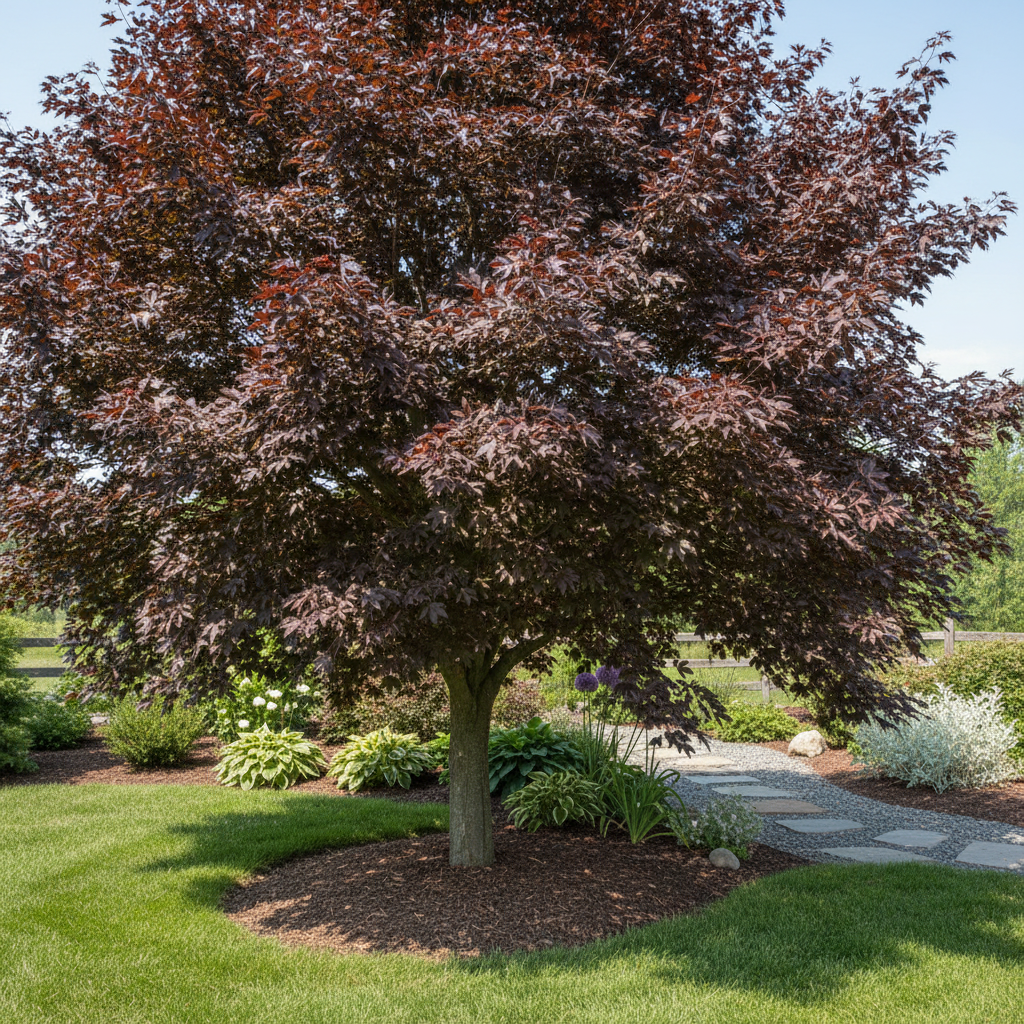
 The Royal Red Maple is a popular, hardy, shade tree known for its dense, rounded canopy and intense, deep purple maroon foliage that lasts from spring through to fall. The most distinctive feature is its large, lobed leaves that emerge as a rich red in spring and maintain a deep, shimmering burgundy or purple red colour through the summer. In early spring, before leaves appear, the tree produces clusters of striking lemon yellow or yellow green flowers that contrast sharply with the dark branches. Unlike many green leaved maples that turn bright red, the Royal Red typically shifts into a deeper, dark purple or reddish bronze hue in autumn. For the best performance and colour retention, plant in full sunlight.
 ★ Featured
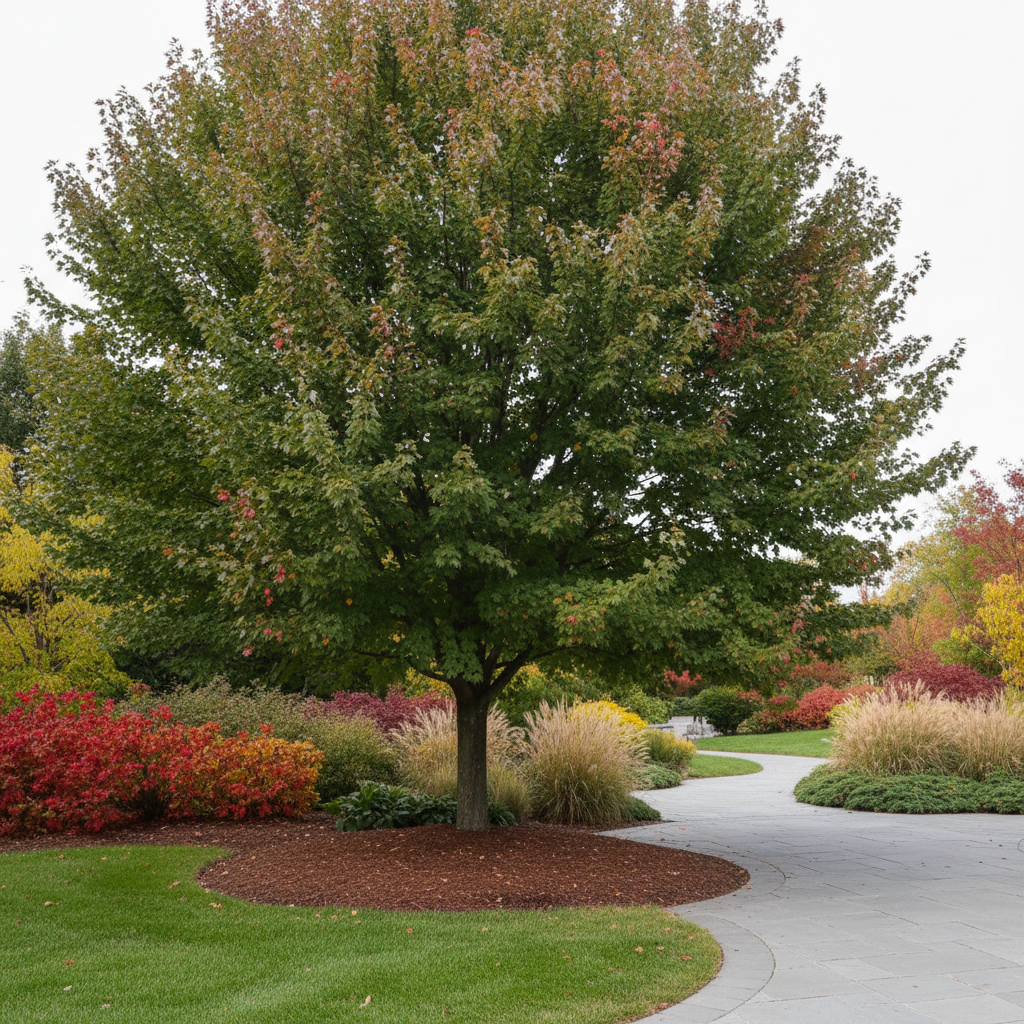
 The Red Maple is one of the most common and adaptable deciduous trees in North America, prized for its vibrant scarlet foliage in autumn. It is often used as a fast growing shade tree in landscapes and is known as the "swamp maple" for its ability to thrive in wetter conditions. It features 3 to 5 lobed leaves with sharp "V" shaped notches and toothed edges. While leaves are green in summer, the tree earns its name through its red flowers, twigs, buds, and brilliant fall foliage. Prefers full sun for the best fall colour but will tolerate part shade.
 ★ Featured
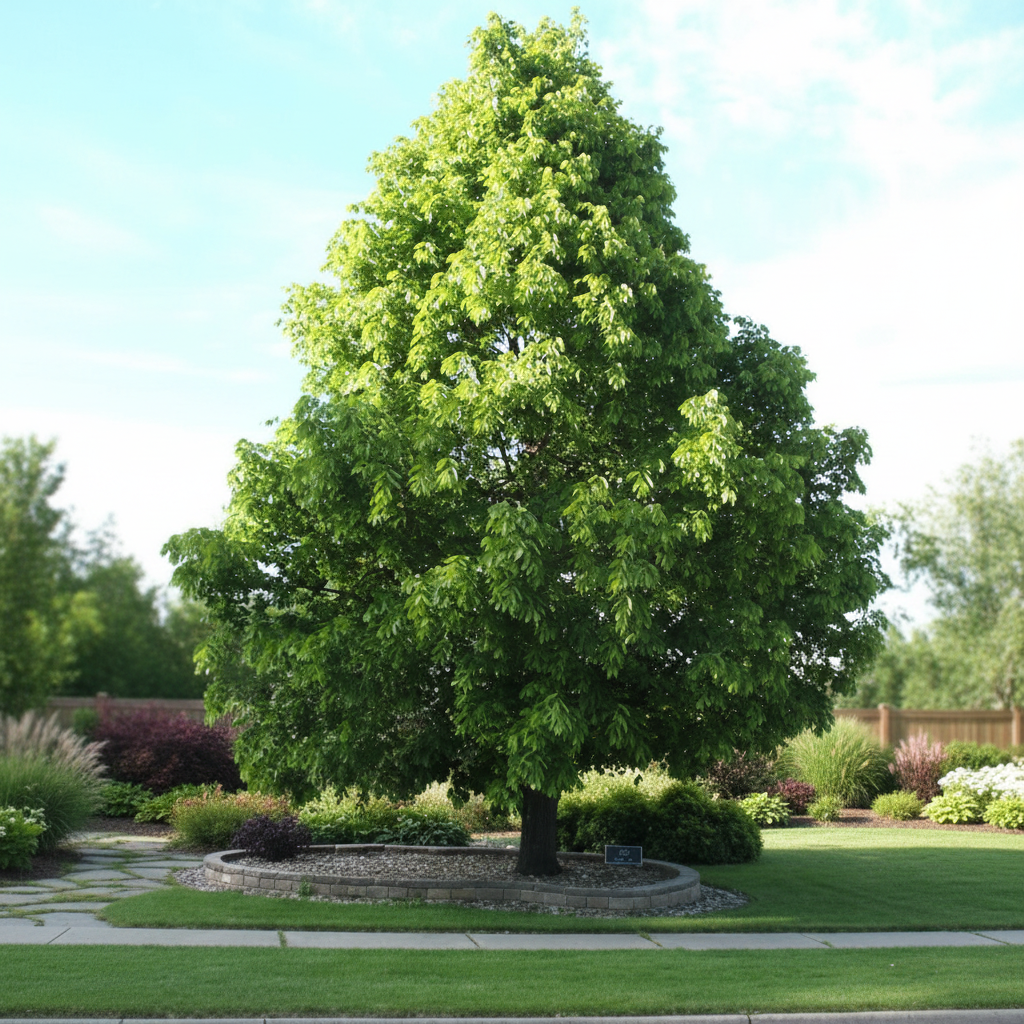
 The American Linden, also commonly known as Basswood, is a majestic native shade tree celebrated for its dense, heart-shaped foliage and highly fragrant summer flowers. It features large, dark green, heart shaped leaves with serrated edges. In autumn, the leaves typically turn a pale to golden yellow. Drooping clusters of small, fragrant, yellowish white blossoms appear in June or early July. These blooms are so attractive to pollinators that the tree is often called the "Bee Tree". This variety produces small, hard, pea sized nutlets attached to a wing like leaf. Thrives in full sun to partial shade, requiring at least 6–8 hours of direct light daily for optimal flowering and growth.
 ★ Featured
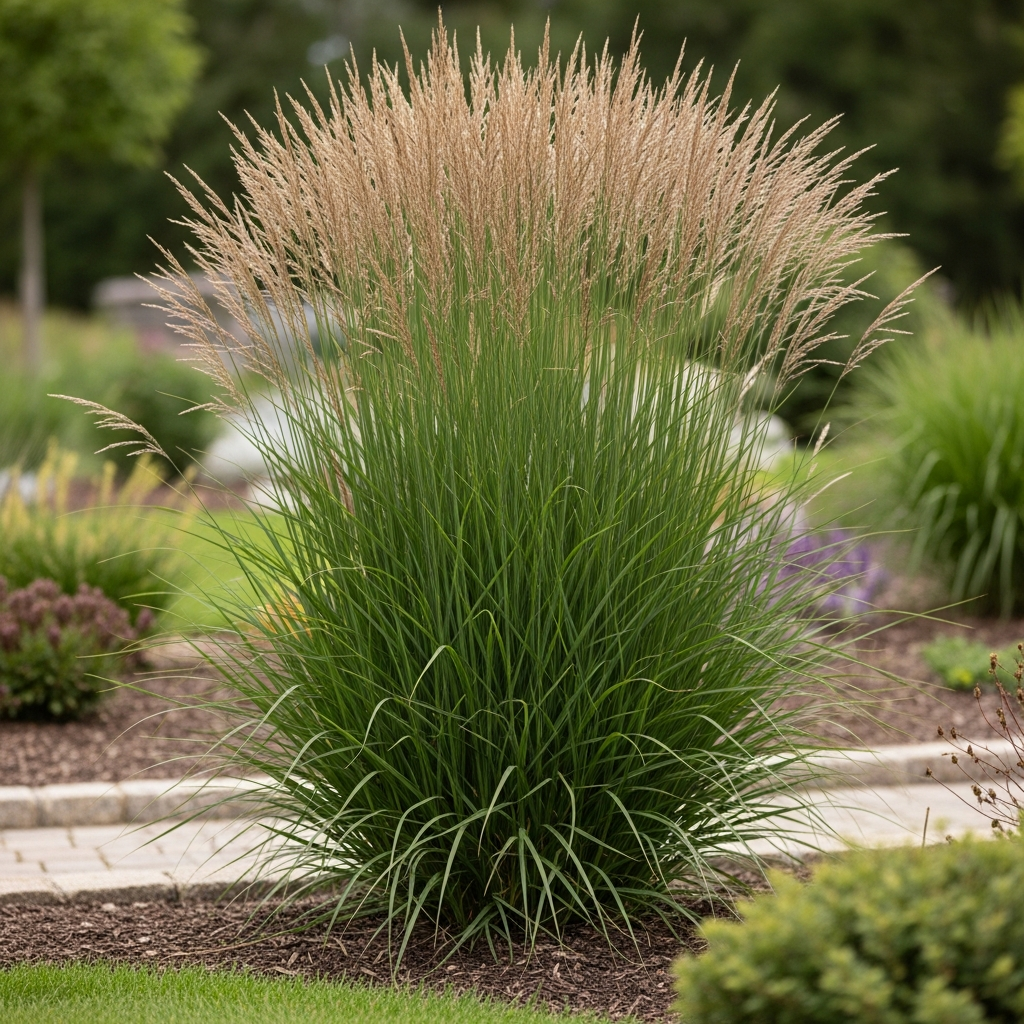
 Karl Foerster Feather Reed Grass is a highly popular, award winning ornamental grass known for its strong vertical habit and low maintenance nature. It is also a sterile hybrid, meaning it stays in tidy clumps without spreading invasively or self seeding. Featuring deep green foliage that emerges early in spring and feathery plumes that appear in early summer with a pinkish purple tint, eventually maturing into a golden tan or wheat like colour that stays throughout the winter. Performs best in full sun, at least 6 hours daily, to maintain its upright form but can benefit from partial afternoon shade to prevent stress.
 ★ Featured
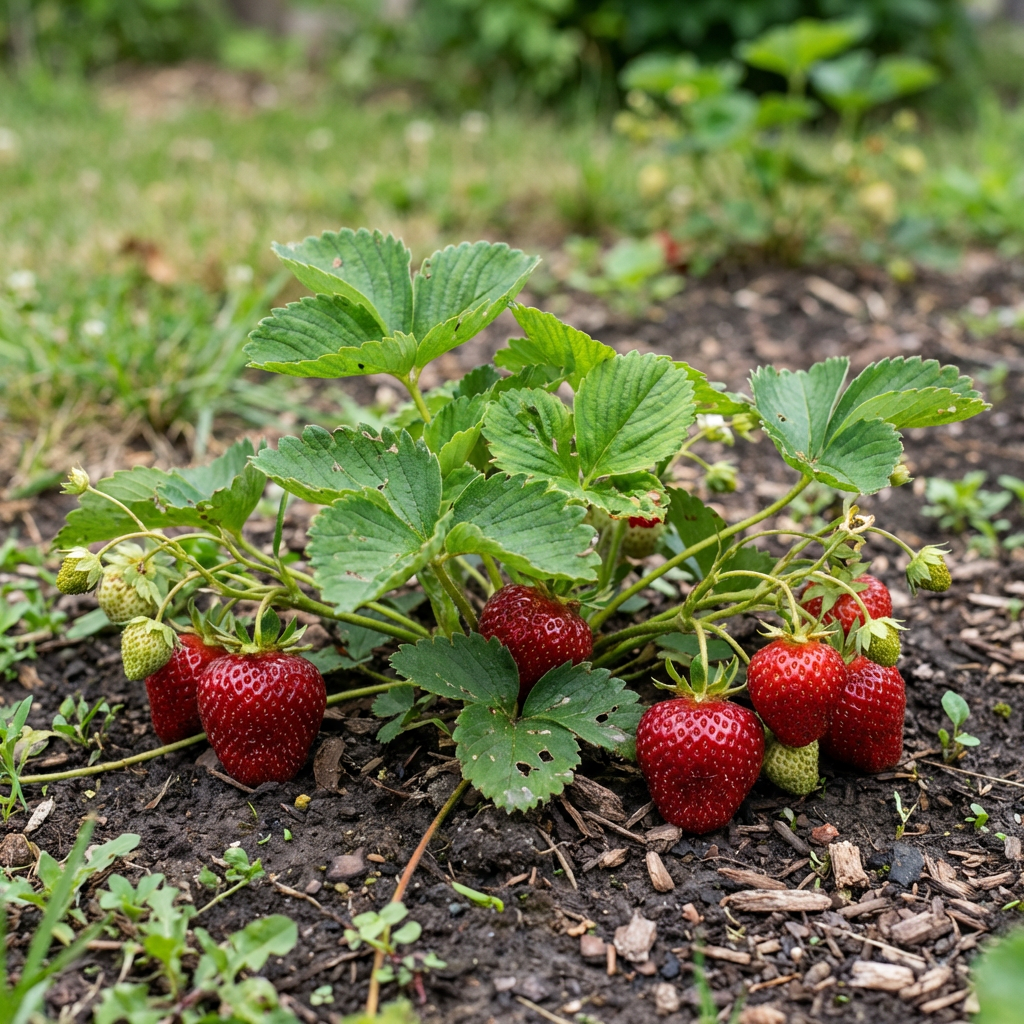
 Honeoye (pronounced hun-ee-oy) is a widely popular June bearing strawberry known for its exceptional winter hardiness and high yields. It produces large, firm, conical berries with a bright, glossy red colour. The berries have a sweet yet tangy flavour, and is most balanced when grown in moderately warm conditions. As a June-bearer, it produces one concentrated crop annually, typically over a 2–3 week period in early summer. Common uses include, fresh eating, preserves, or freezing. Requires full sun for maximum yield and best flavour profile.
 ★ Featured
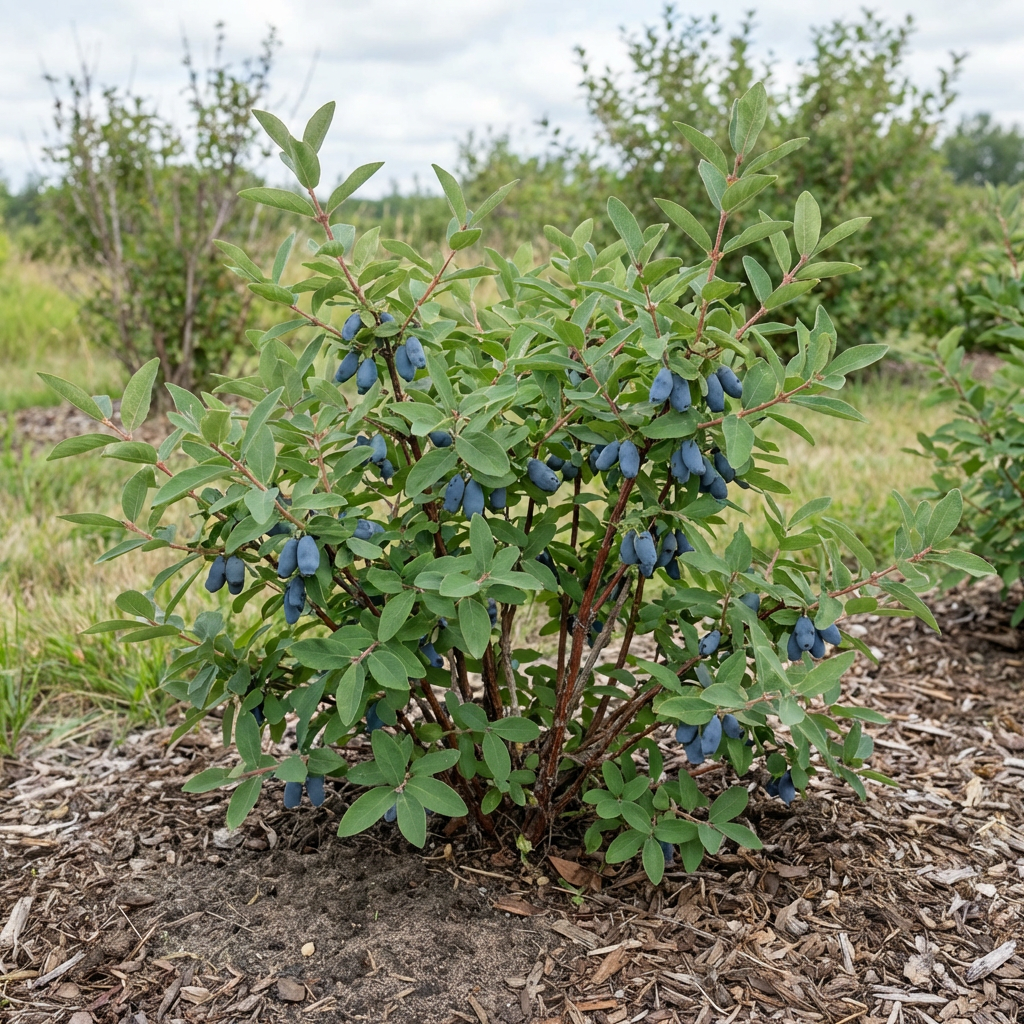
 Berry Blue Haskap is an exceptionally cold hardy, vigorous shrub widely prized as a "universal pollinator" for early blooming haskap varieties. While it produces its own sweet tart fruit, its primary role in most gardens is to ensure a heavy fruit set for other varieties like Borealis and Tundra. It produces small, tubular, creamy white flowers very early in spring, often in May. The flavour is described as a tangy sweet blend of blueberries, raspberries, and blackberries. If picked too early, the fruit may be somewhat bitter meaning they are best when fully mature in late June to early July. It produces elongated, dark blue berries of average size and a mature, well pollinated plant can yield between 8–10 lbs of fruit annually. Because haskaps are self-incompatible, they must be planted with a different, compatible variety that blooms at a similar time to produce fruit. The best pollinators for Berry Blue are Aurora, Borealis, Honey Bee, or Indigo Gem. Plant in full sun to maximize yeild, however this variety will tolerate part shade.
 ★ Featured
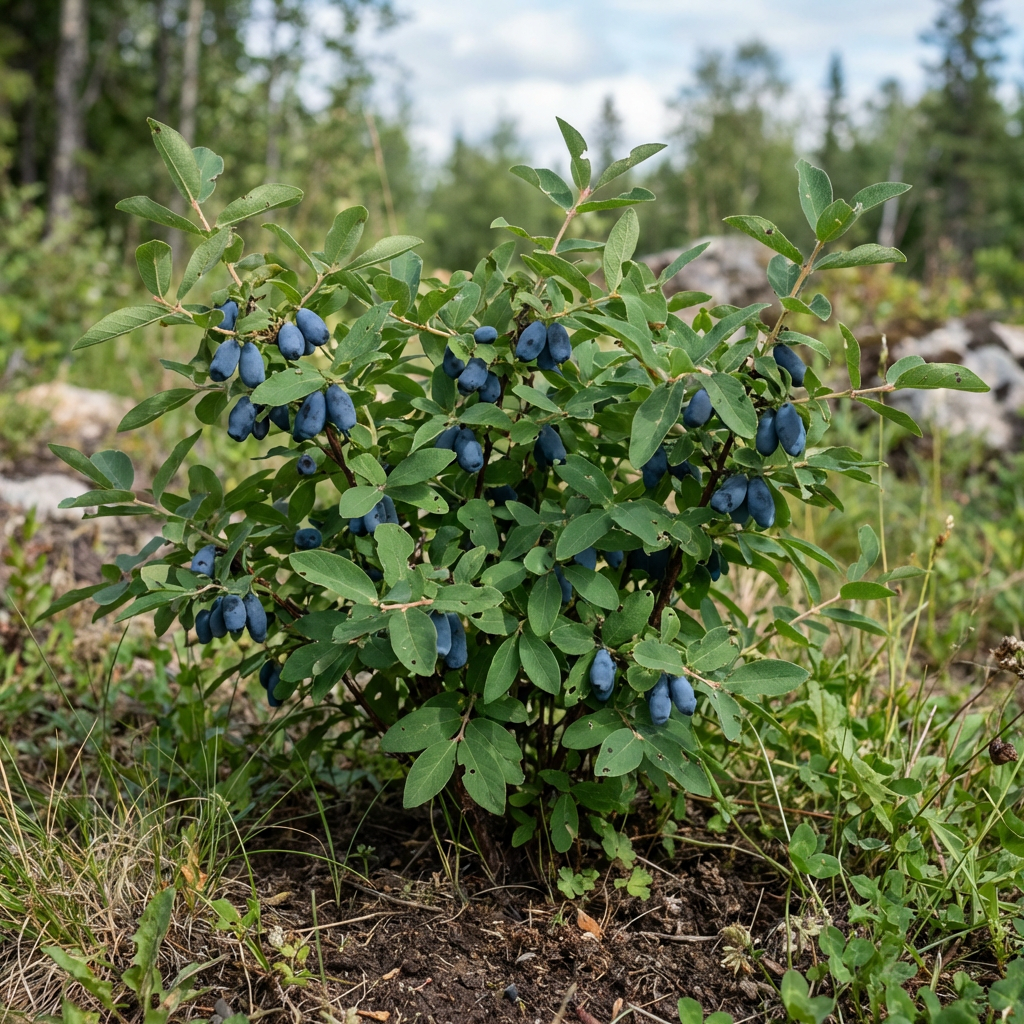
 Borealis Haskap is an early fruiting shrub known for producing some of the largest and best tasting berries of the University of Saskatchewan releases. Often called honeyberries, these plants produce dark blue, oval shaped fruit with a sweet tangy flavour frequently described as a cross between a blueberry and a raspberry. The fruit is softer and more delicate than other varieties like Tundra or Berry Blue, making it ideal for fresh eating, baking, and preserves rather than mechanical harvesting. Experts at the University of Saskatchewan recommend pairing it with Aurora, Honey Bee, or Berry Blue for the best pollination and yield. While Borealis prefers full sun for maximum fruit production, it can tolerate part shade.
 ★ Featured
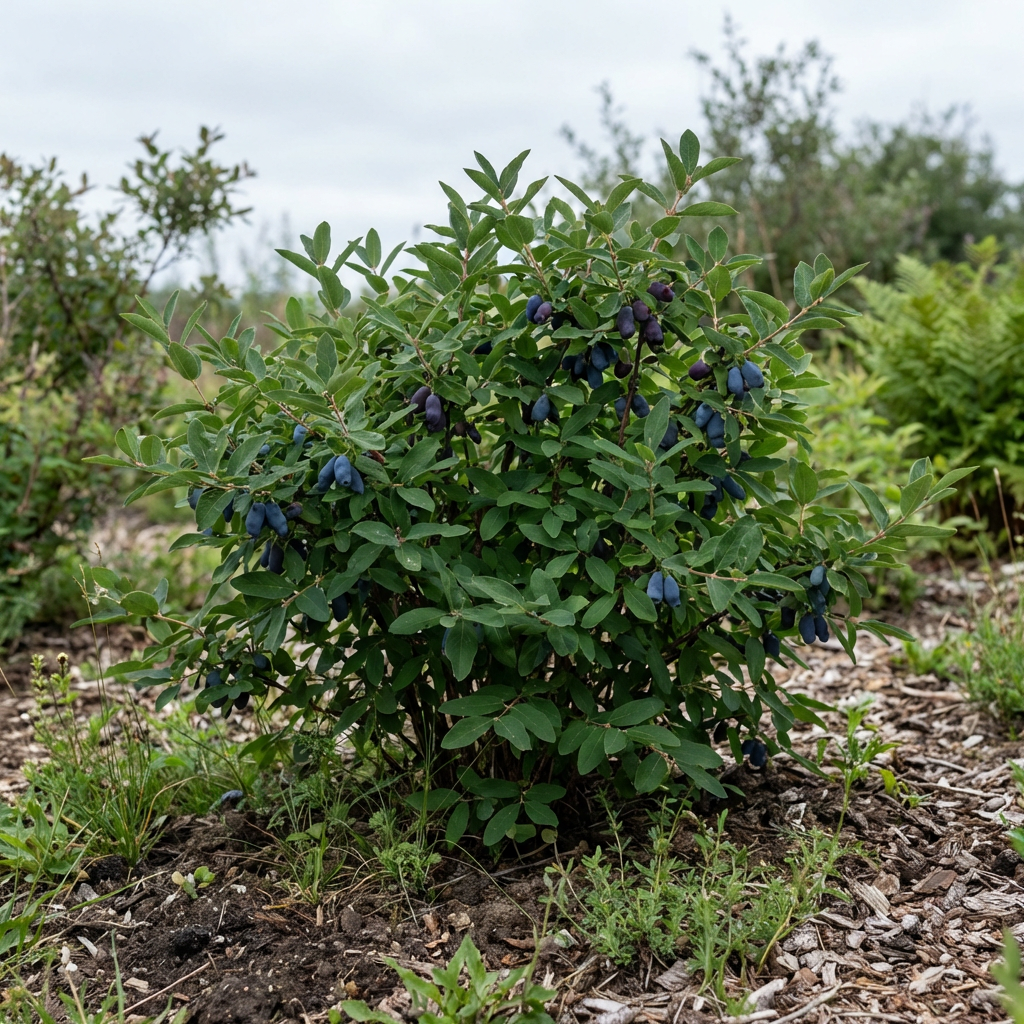
 Cinderella Honeyberry is a compact, extremely cold hardy shrub that is valued for its large, sweet-tart blue berries that ripen very early in the season. It is a traditional Siberian variety often used as a pollinator for other early blooming honeyberry varieties. The berries have a sweet-tart or semi sour flavor profile, often compared to a blend of wild blueberries and black currants. It produces deep bluish-purple, elongated, or round berries that typically ripen in June, often weeks before other varieties and berries. Recommended uses for this fruit is fresh eating, preserves, jams, jellies, and even home winemaking due to its slight currant like tannins. Under ideal conditions, a Cinderella bush can live and produce for approximately 20 to 30 years. Ideal pollinators include Borealis, Tundra, and varieties from the Indigo series. Thrives in full sun for maximum fruit production, but will tolerate part shade.